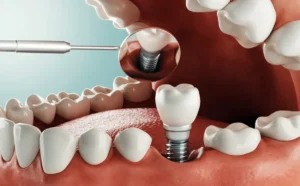

You have a toothache, but you don’t know who you should see, so you search on the net for “difference between dentist and oral surgeon.” Well, knowing the difference between each dental professional can save you a lot of time, money, and unnecessary stress when a dental issue suddenly comes up. While both play a vital role in your dental health, they have different levels of training and areas of expertise.
A general dentist is primarily concerned with routine care and everyday treatments such as fillings, root canals, and performing simple tooth extractions, while an oral and maxillofacial surgeon handles the more complex dental surgery involving the mouth, jaw, and face.
In most cases, you should start by seeing a general dentist. They can refer you to an oral surgeon when you need advanced treatment for issues like impacted wisdom teeth, jaw problems, complicated dental implants, or other surgical needs.
What Does a General Dentist Do?
A general dentist is your main go-to for everyday oral health and the first person you should see when most dental problems arise. They provide routine preventive and restorative care, including:
- Regular check-ups and professional cleanings to keep teeth and gums healthy
- Cavity detection, fillings, crowns, and other basic restorative work
- Root canals and basic gum treatment for problems like tooth pain or gum disease
- Fluoride treatments, dental sealants for kids, and oral cancer screenings
- Guidance on brushing, flossing, and diet for healthy teeth and gums
General dentists earn a D.D.S. or D.M.D. degree after four years of dental school following a bachelor’s degree, then pass a state licensing exam before practicing.
What an Oral Surgeon Does
An oral surgeon – also known as an oral and maxillofacial surgeon – is a surgical specialist who has had extra training after completing dental school, focusing on advanced surgical techniques in the mouth, jaw, face, and related structures. Oral and maxillofacial surgery is actually one of the 12 specialties recognized by the American Dental Association.
Some of the things an oral surgeon does include:
- Wisdom teeth removal, complex tooth extractions – even those right near nerves or sinuses
- Placing complex dental implants – including bone grafting and surgery to lift the sinus area
- Correcting jaw misalignment with orthognathic surgery
- Treating facial trauma, like jaw and cheekbone fractures
- Handling oral pathology, such as cysts, tumours, or suspicious lesions that may need a biopsy
- Surgical treatment for severe TMJ disorders and reconstructive surgery

Education and Specialized Training: Dentist vs. Oral Surgeon
All oral surgeons are dentists and learn dental medicine, but not all dentists are oral surgeons. An oral surgeon begins an extra year or two of surgical training after dental school.
Dentist path:
- A few years of college before dental school
- Four years of dental school to earn a D.D.S. or D.M.D. degree
- A state licensing exam before they can start practicing
Oral surgeon path:
- The same four years of dental school as a general dentist
- An additional 4-6 years of hospital-based surgical training in an oral and maxillofacial surgery program – which may include rotations in general surgery, anesthesiology, and other areas
- Even more training in anatomy, surgery, and patient care
What Sets Dentists and Oral Surgeons Apart
While dentists and oral surgeons often work together, their focus and skills are pretty different.
| Factor | General Dentist | Oral Surgeon |
| Primary focus | Preventive care, restorative treatment | Surgical diagnosis and treatment |
| Training beyond dental school | None required | 4–6-year surgical residency |
| Anesthesia | Local anesthesia, mild sedation | Local, IV sedation, general anesthesia |
| Typical setting | Dental office | Surgical suite or hospital setting |
| U.S. workforce (2024) | ~129,800 | ~6,100 |
When to See an Oral Surgeon vs a Dentist
Typically, you should start by seeing a general dentist for routine care and evaluation – they can direct your care and determine when to send you to an oral surgeon for more complicated issues.
See a general dentist for:
- Regular check-ups and cleanings to catch any problems before they become serious
- Small issues like tooth sensitivity or mild tooth pain
- Chipped or cracked teeth – they can usually repair these pretty easily
- Early gum disease and other minor cosmetic concerns
See an oral surgeon, usually after a referral, for:
- Impacted wisdom teeth or third molars that need surgical removal
- Teeth that are broken at the gumline or need complex extractions
- Complicated dental implants involving bone loss or more
- Corrective jaw surgery or orthognathic surgery
- Facial trauma from an accident
- Chronic jaw locking or significant TMJ disorders that aren’t helped by other treatments
- Biopsy of suspicious oral lesions
Rule of thumb: For routine care and preventive check-ups, go to a dentist – and for complex surgery of the jawbone, nerves or facial structures, an oral surgeon is your best bet.
Common Conditions, Dental Implants, and Other Oral Surgeries: Who gets treated by Whom?
Some procedures are easy pickings for just about any dentist, but others require a highly specialized oral surgery specialist.
Tooth extractions: If you just need a simple extraction, a general dentist is all it’ll take – they can handle roots that are not too tricky, and the tooth is fully erupted. However, when you’ve got teeth that are impacted, have curved roots, or are close to major nerves or sinuses, an oral surgeon is the one to see.
Dental implants: Routine single implants that don’t require much bone to place are usually handled by general dentists. But if you’ve lost a bunch of teeth, need bone grafting, or have to lift a sinus to make room – you might need an oral surgeon to do the honours.
Jaw surgery: If you’ve got really bad bite problems, jaws that are all out of whack, or a face that’s just not symmetrical – you need orthognathic surgery – and that’s an oral and maxillofacial surgery specialist’s gig. They’ll probably even work with an orthodontist to sort everything out.
Other oral surgical procedures include stuff like sinus lifts, removing cysts or tumours, fixing facial fractures, dealing with advanced infections, and reconstructing your face.

Making an Informed Choice and Preparing for Your Visit
Knowing the difference between a dentist and an oral surgeon is key to feeling like you’re in good hands.
How to decide: Start with your general dentist – they can take a look and tell you a starting treatment plan, whether it’s an oral surgeon you need, or if it can just stay simple. If it’s something complex like impacted teeth, jaw surgery, or fancy dental implants – they’ll let you know it’s specialist territory.
Dentists and oral surgeons are both just trying to keep your mouth, jaw, and face looking and working their best. The main difference is that dentists stick to routine stuff, while oral surgeons are the ones who do all the fancy surgical stuff – when it involves the mouth, jaw, and facial bones.