
Lots of parents are left wondering exactly when to take their kids to the dentist for the very first time & how often they should go after that. The answer is actually a lot simpler than you might be thinking, and getting it right can save your child from a whole lot of pain, a lot of costly procedures, and long-term dental problems. This guide is going to walk you through every milestone visit from age 1 to 7, so you know exactly what to expect.
- Get your child to the dentist for the first time by their first birthday, or within 6 months of that first tooth popping through, whichever comes first.
- The American Academy of Pediatric Dentistry and the American Academy of Pediatrics both advise that you should take your child to their first dental appointment around age 1.
- Baby teeth may only last a short while, but they play a crucial role in eating, developing speech, and helping guide those permanent teeth into place, so looking after them is key to your child’s lifelong oral health.
- The ages of 1, 2, 3, 4, and 7 are all key milestones for your child’s teeth, and for a specialist orthodontic check-up.
- Putting off dental visits can let problems develop in your child’s teeth before you even know there’s an issue. Early visits can actually help prevent problems from arising in the first place.
Why Those Early Dental Visits Matter For Baby Teeth
The thing is, any child’s dental visits should start long before any problems appear. If your child starts complaining of pain, it’s probably been going on for months before that.
Baby teeth usually start coming in around six months and start falling out at age 6. They may only last for a short while, but they play a vital role in your child’s eating habits, speech development, and space holding for their adult teeth.
They are also crucial for proper jaw and mouth development.
Those early dental visits are when the dentist can spot issues that you, as a parent, might not even notice: tooth decay, tongue-tie, enamel defects, and jaw growth problems.
You might think your child is eating normally, but if they’re having trouble with certain foods or are reluctant to chew, it could be a sign of a dental problem.
If their gums are swollen or bleeding, it could be a sign of infection or decay. Persistent bad breath might indicate a cavity or gum disease.
Routine dental care from a very early age also helps your child get used to the dentist’s office and makes them feel a lot more comfortable over time.
Leaving cavities in baby teeth untreated can lead to all sorts of problems: pain, infections, difficulty eating, and even damage to the developing permanent teeth underneath.
When Should My Children Have Their First Dental Appointment?
Get your child to their first dental visit by their first birthday or within six months of that first tooth coming in, whichever comes first. They should see a dentist by age 1.
The AAPD guidelines are pretty clear on this one: You should aim to get them to the dentist by the first birthday. Most babies will get their first tooth between 4 and 10 months, so that’s a pretty handy target for most parents.
That first dental appointment is all about a quick look at those baby teeth and gums, plus some parent education, not a major treatment in sight. If you’ve noticed any weirdness with your child’s teeth, like discoloration, chipped teeth, white patches, or swelling on the gums, get them in to see the dentist a bit sooner.
What Goes On At Your Child’s First Dental Visit?
The first appointment is usually a breeze and is tailored to your child’s age and personality. It’s usually around 30 to 45 minutes long.
So what can you expect?
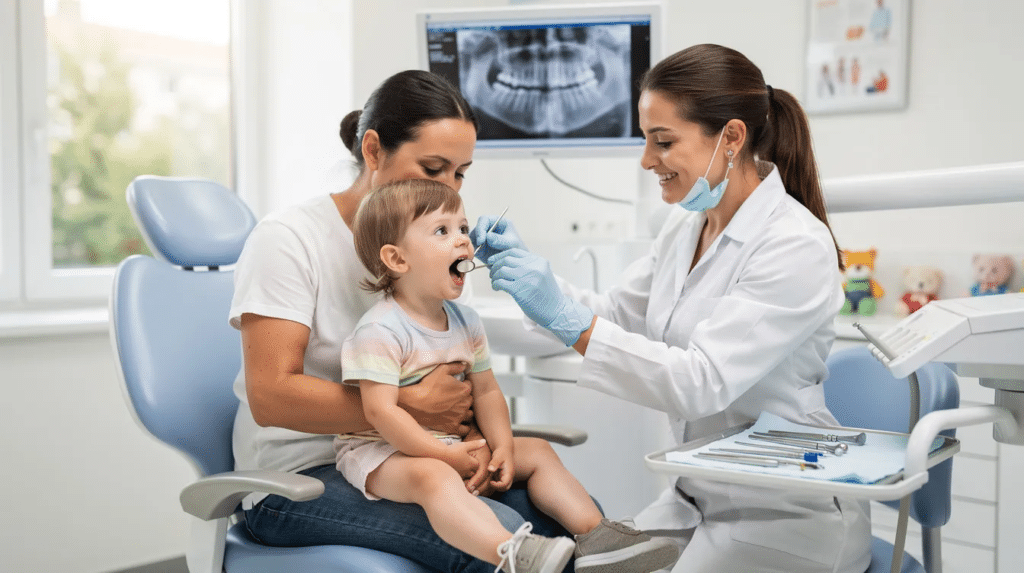
- The dentist will take a look at your child’s mouth, including their teeth, gums, tongue, and whole mouth. For little ones, this might be done with them sitting on your lap.
- They’ll do a quick clean with a soft-bristled toothbrush, check for early signs of tooth decay, and have a chat about fluoride (where they get their fluoride from, toothpaste, that sort of thing).
- The dentist will also review your child’s feeding habits and check if they’re using a pacifier or sucking their thumb.
- X-rays are rarely needed at the first visit, unless there’s a specific concern like suspected decay or trauma.
That first visit is all about spotting any problems and educating you on oral care. Have a chat with the dentist about your child’s health history so they can tailor their advice, and don’t worry if you need to book a morning appointment for a bright-eyed and bushy-tailed child. Just stay calm and relaxed, and let them get used to the idea of going to the dentist.
The dentist will give you all sorts of practical tips for looking after your child’s teeth, like brushing your baby’s teeth, using fluoride toothpaste, and planning the next appointment.
Age By Age Guide: Key Milestone Dental Visits
There are a few key ages where your child’s dentist will look for specific things: age 1, 2, 3, 4, and 7.
Here’s what they look for and why each visit matters for your child’s teeth.
Age 1: The Child’s First Dental Visit
Your child’s first dental visit should happen by age 1, even if it’s just a couple of baby teeth. First visits should be by age 1, and about checking out that first little tooth.
The 1st dentist visit checks how those first little teeth are coming from the oral tissue & keeps an eye out for early cavities, enamel problems, teething issues, and mouth pain.
- You’ll get a rundown on what’s going on with feeding, how often you’re breastfeeding, bottle or sippy cup use, and whether your little one is still hanging onto night nursing.
- You’ll get some advice on wiping gums, brushing those teeny tiny teeth twice a day with a smear of toothpaste, and how to gently break the bad habit of bringing your baby to bed with a bottle.
- This is a great chance to ask about teething pain, all that drooling, and whether your little one has a pacifier habit to deal with
This early visit sets the stage for all those future regular dental visits and helps you establish a dentist your kiddo will feel at home with, their “dental home.”
Age 2: Building Good Oral Hygiene Habits for a Child’s Teeth
By the time your little one is two, they probably have 8 to 12 primary teeth in there, giving the dentist a better view of how things are spacing out and how healthy that enamel is.
- At age 2, your dentist visit is all about checking for early signs of childhood cavities & reinforcing that brushing with a teensy bit of toothpaste twice a day is the ticket.
- You’ll get some guidance on how to phase out those bottles and sippy cups, reduce juice and sticky snacks, & encourage water in between meals.
- Keep in mind that at this age, visits can be a little more rambunctious, so they’re kept short & fun.
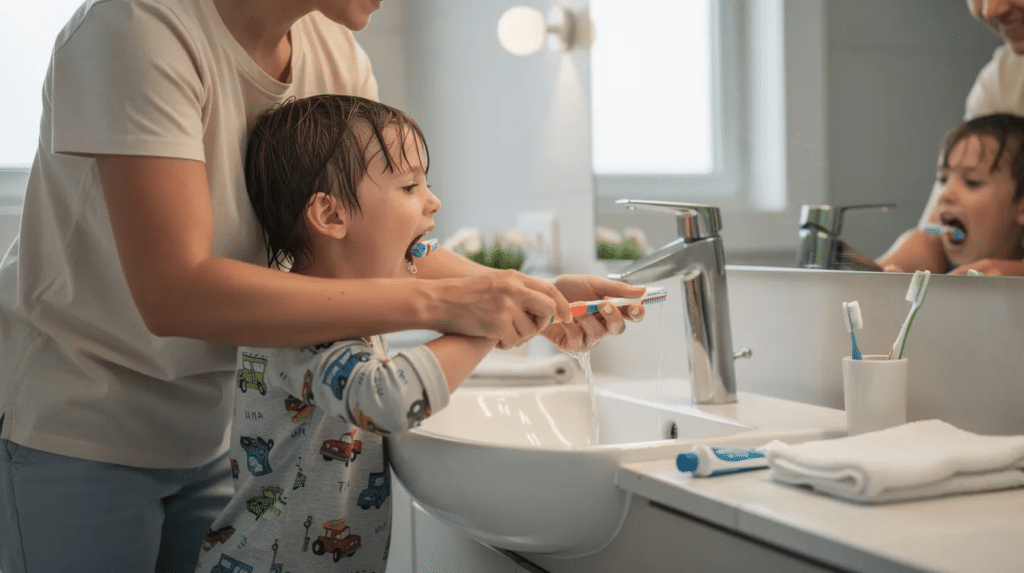
- To get your little one brushing at home, try standing behind and gently guiding that toothbrush, helping them get the hang of it.
Age 3: Full Set Of Baby Teeth And First “Big Kid” Checkup
Around the time your kiddo is 3, most kids have all 20 primary teeth. This is one heck of a major milestone dental visit.
- The dentist gives a good once-over for how the teeth are lining up, their bite & gum health, checking to see if there are any issues with crowding or crossbite.
- This is a great time to talk about thumb sucking, lip sucking, pacifier use, or nail biting, and how these habits can bum out your baby’s jaw & front teeth over time.
- Your little one gets to practice sitting in the chair, opening wide, and following simple instructions; they’re getting to be a big kid after all.
- You’ve got to try to make brushing fun, songs, a timer, whatever works to keep those teeth clean & those healthy oral habits on track.
Age 4: Fine-Tuning Dental Care Before School
If you’re an older kiddo who’s been seen regularly, the age-four dentist appointment builds on all the good work you’ve been doing so far to keep those baby teeth healthy before school.
One of the reasons this exam is such a big deal is that nearly one in four kids aged 2 to 5 has cavities in those baby teeth, which really drives home why keeping up with those visits matters.
The dentist will be keeping an eye out for any early tooth decay, enamel problems, and any speech or chewing issues related to their teeth and bite.
They might even recommend preventive treatments like topical fluoride or sealants on those baby molars.
As your little one gets older, you can start to let them take a little more responsibility for brushing, while still supervising and finishing up twice a day.
Age 7: First Orthodontic Check & Mixed Dentition
Around the time your kiddo is 7, permanent front teeth and molars usually start coming in, a real big deal in oral development.
- The American Association of Orthodontists recommends that you get an orthodontic evaluation by age 7 to keep an eye out for crowding, overbite, underbite, or crossbite.
- During this dentist visit, your orthodontist may use some X-rays to check out those unerupted permanent teeth & jaw growth to make sure everything is developing on track.
- Early detection lets you get interceptive treatment, potentially cutting down or even eliminating braces later down the line.
- Even if your kiddo doesn’t end up needing braces, this second look helps you plan ahead & keep those teeth well aligned.

How Often Should Kids Go To The Dentist?
After your kiddo turns 1, you should be seeing the dentist every six months.
Regular visits let the pros do a good cleaning, provide fluoride treatments, and monitor your little one’s jaw and tooth development.
Regular visits are also how you catch any issues early, so they don’t turn into painful and expensive problems.
Some dentists may want to see your little one every 3 months if they’re at a higher risk, like if they snack a lot, have weak enamel, have special needs, or have a history of cavities.
That way, you can keep plaque under control and catch small issues before they become big ones.
Schedule an extra visit any time your kiddo has a toothache, a fall, or visible changes in their teeth or gums.
Don’t wait. Get them to the dentist ASAP if something looks off.
Dental X-rays In Children: When Are They Needed?
Modern dental X-rays for kids use super low radiation and are only used when they actually give the dentist some real insight.
Most kids don’t need a set during their first visit unless it looks like there might be some decay, trauma, or developmental problems.
Most kids get their first set of bitewing X-rays around age 4 to 6. That’s when it gets harder to see cavities in between the teeth just by looking.
X-rays let the dentist take a look for hidden decay, check the roots of the teeth, see if there’s enough room for the permanent teeth to come in, and get a general sense of your kiddo’s jaw development.
Just talk to your kid’s dentist about when and how often X-rays might be needed based on how high or low the risk of cavities is.
Choosing The Right Dentist For Your Child
You’ve got a choice to make between a general dentist and a pediatric dentist.
A general dentist can do the job, but a pediatric dentist has an extra 2 to 3 years of training specifically in child development, behavior guidance, and pediatric dentistry for little ones from infancy to the teenage years.
Pediatric Dental Offices Like ODS Often Go The Extra Mile
These places often feature kid-friendly décor and smaller equipment, and most importantly, they have staff trained to help a nervous or high-energy child feel perfectly at ease in that dentist’s chair.
Consider a pediatric dentist if your kid is under 3, has special needs, or is really fearful.
Ask about emergency care policies and how they handle a crying or uncooperative child before committing to the dentist you want your child to grow up going to.
A healthy smile starts with finding the right dentist for your kid.
At Olive Dental Solutions, we know that a child’s early experiences at the dentist can shape how they feel about oral care for years to come.
That’s why we take the time to create a warm, friendly environment where kids feel at ease, and parents feel supported.
Our bilingual team focuses on gentle, personalized care, helping little ones build healthy habits while keeping a close eye on their growing smiles.
We’re here to make every visit a positive one, for the whole family.
Everyday Dental Care For Babies, Toddlers and Young Kids
Looking after your child’s teeth at home is just as important as regular dentist visits. That’s what keeps those teeth cavity-free.
Taking care of baby teeth right from the start helps get good lifelong dental health habits in place for the rest of their life.
| Age | What To Do |
| Birth-first tooth | Wipe gums with a damp cloth after feedings |
| The first tooth appears at age 3 | Brush twice daily with a soft-bristle toothbrush and a rice-sized smear of fluoride toothpaste |
| Ages 3-6 | Use a pea-sized amount of fluoride toothpaste; the parent finishes brushing |
| Ages 6-8+ | The child can brush more independently; the parent still supervises |
Cut down on sugary drinks, juice & sticky snacks. Encourage water between meals. Try not to let little ones graze all day long, either. Once teeth start coming in around age 6-7, get them a mouthguard for contact sports. With these good habits in place, your kid’s teeth will be protected for years to come.
What Happens If You Keep Delaying Your Child’s First Dentist Visit?
Putting off those regular dentist trips lets hidden dental problems get worse.
Cavities in the early stages don’t cause pain, so many parents miss them until it’s too late and the decay has really taken hold.
If you don’t get those cavities treated, your kid will be dealing with toothaches, trouble sleeping, poor appetite, and may even have to miss day care or school.
Sometimes it’s even necessary to get crowns, pull teeth, or treat them under sedation, which is way more invasive and expensive than catching it early.
When baby teeth decay, they can damage the permanent teeth growing underneath.
If your kid loses a tooth to decay, it can cause all sorts of problems, like trouble talking, trouble chewing, and issues with the growth path of their adult teeth, which makes orthodontic problems even more likely later on.
Even if you’ve already missed out, the best thing to do is to just get your kid to the dentist ASAP and get back on track.
Your kid’s oral health for life depends on catching any issues early rather than waiting for them to get painful.
Frequently Asked Questions
My kid is already 3 and has never been to the dentist. Is it really too late?
Not at all. Pediatric dentists see first-time patients this age all the time and know how to make the experience positive. Book a visit and let the office know about any fears or special needs beforehand.
What if my kid just won’t open their mouth at the dentist?
That’s completely normal. Pediatric dentists use kid-friendly techniques and positive reinforcement to help children feel comfortable, and most become more cooperative over time.
Can cavities in baby teeth really affect adult teeth later on?
Yes. Untreated cavities can affect developing permanent teeth, and early tooth loss can lead to crowding or alignment issues later on.
Should I take my kid to the dentist after a fall or tooth injury?
Yes. If a tooth is chipped, broken, or loose, see a dentist as soon as possible to check for hidden damage and prevent future complications.
How do I know if my kid needs a pediatric dentist or an orthodontist?
Pediatric dentists handle routine care and monitor development, while orthodontists focus on bite and alignment issues. Your child’s dentist can refer you if needed.