
If you’re browsing for “sharp tooth cutting tongue” on the internet, most probably you are dealing with this issue already. Having a sharp or broken tooth that’s cutting your tongue can be pretty painful, but the vast majority of minor cuts don’t require immediate dental care and can be managed for now on your own at home. Helping the sharp edge by covering it with some dental wax or a sugar-free piece of gum and gently rinsing with some warm salt water can serve as some quick pain relief for a bit.
Still, a chipped or broken tooth needs prompt attention from a dentist to prevent oral health problems like appearance, infection, tooth decay, or further damage to the tooth. If you start to experience uncontrolled bleeding, severe swelling, a visible nerve, or just persistent pain, you need to get in to see a dentist ASAP, as these can be signs of a real dental emergency.
Understanding How a Sharp Tooth Can Cut Your Tongue
A tooth has a layer of hard enamel on the outside, some dentine underneath, and then there’s the pulp right in the centre of the tooth where the nerves and blood vessels live. If a tooth breaks or chips its outer layer, it ends up with jagged edges that scrape against your tongue, your cheek, and other soft tissues each time you eat, drink, or talk.
As you might have read in dental studies, chipped teeth can range from tiny tooth enamel fractures to deeper breaks that get right down to the pulp.
- There’s just no way to regrow tooth enamel, so broken teeth stay rough until a professional dentist smooths or fixes them.
- Exposed dentine is pretty rough, and your tongue and other parts of your mouth don’t like it much, especially with hot or cold beverages, acidic foods, or when you bite.
- If you can see a pink or red bit in the middle of the break, it may be an exposed nerve.
- A deep tooth fracture is a dental emergency, and you’ll need to get that sorted fast; it’s not just a minor bugbear.
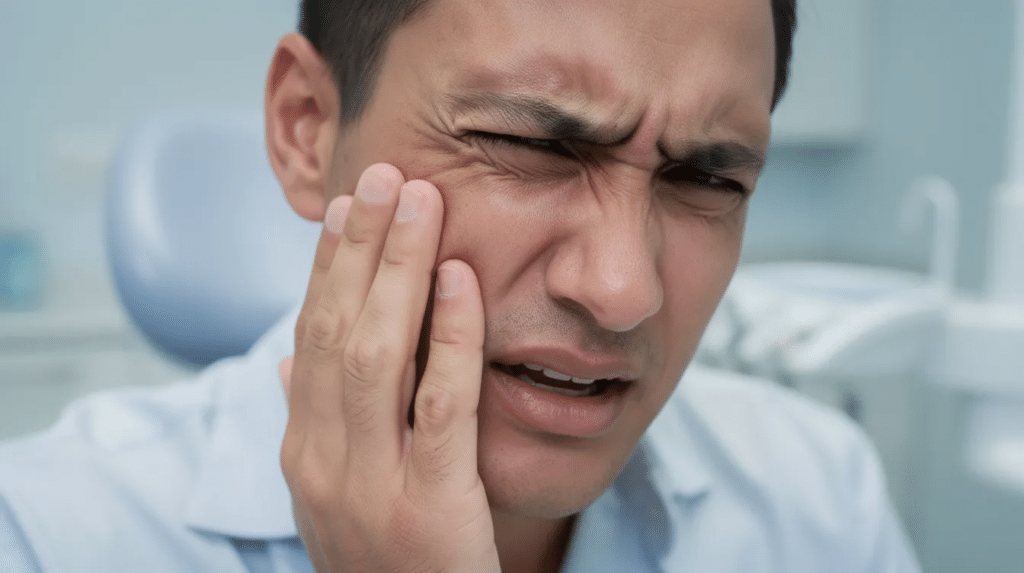
How To Control Bleeding And Cover Sharp Edges: Help for a Sharp Tooth Cutting Your Tongue
Here are temporary measures you can follow, which will give you some temporary relief if a sharp tooth is annoying your tongue right now. These steps won’t fix the broken tooth, but they will make things a bit more bearable for now.
- Rinsing with warm salt water can help clean small cuts and reduce bacteria. It’s simple enough to do, just mix half a teaspoon of salt into a mug of warm water, and swish it gently a few times a day.
- Using some dental wax. There’s a product called dental wax that you can get at most pharmacies and drugstores. You put a small piece over the broken area to protect your tongue from the sharp edge. Make sure to dry the tooth first, then press the wax over it.
- If you can’t get any dental wax, some sugar-free gum can work too, but don’t chew on the broken side, obviously.
- If you start to bleed, put a clean bit of gauze on the cut and apply some gentle pressure for 10-15 minutes. A damp tea bag can also help stop the bleeding.
- If you are in pain, consider taking an over-the-counter painkiller, but be sure to follow the instructions on the packaging! And whatever you do, don’t put aspirin directly on the tooth or tongue.
- If you’ve experienced some trauma that’s caused swelling, applying a cold compress wrapped in a cloth to the outside of your cheek for 15 minutes on and 15 minutes off can help reduce inflammation and ease discomfort. Just be sure not to place ice directly on your tongue or gum tissue.
What Not To Do With A Broken or Chipped Tooth
Some so-called quick fixes might actually make things worse.
- Don’t try to grind down a sharp tooth using a nail file or some sandpaper; that can just make the problem much, much worse.
- And don’t keep playing with a chipped tooth using your tongue, that just makes the cut deeper and makes it hurt more.
- Don’t put any alcohol, mouthwash, or whiskey on the tooth; that’s just going to irritate the exposed dentine and won’t fix the tooth one bit.
- Try to avoid eating or drinking things on the broken side that are going to hurt, that means no hard foods, no ice, no nuts, no sticky foods, and so on.
- And please, for goodness sake, don’t ignore a broken tooth for months, that can lead to all sorts of complications down the line, like abscess and gum disease.
How Dentists Assess a Broken Tooth That’s Cutting Your Tongue
At the dentist, they will ask you when the tooth broke, how it broke, and how often the sharp area catches your tongue. They will have a good look at your mouth, check out your gums, your cheek, and your old fillings. They may also take some dental X-rays to see how deep the fracture goes and whether the pulp is involved.
- The dental professional will check if the problem is just a simple chip or if it’s a deeper break that’s affecting the nerve.
- They will check if the break has changed your tooth structure and the way your teeth fit together.
- They’ll be looking for any signs of infection, swelling, or further damage.
- Hopefully, by the end of the appointment, they will be able to give you some clear treatment options, a cost breakdown, and a timeline for stopping the tongue irritation.
Treatment Options to Stop a Sharp Tooth From Cutting Your Tongue
- Smoothing and polishing: If it’s just a small chip, your dentist can smooth the rough edge so it stops catching on your tongue.
- Composite bonding: For slightly larger chips, a tooth-colored material can rebuild the tooth, cover sharp spots, and blend naturally with your smile.
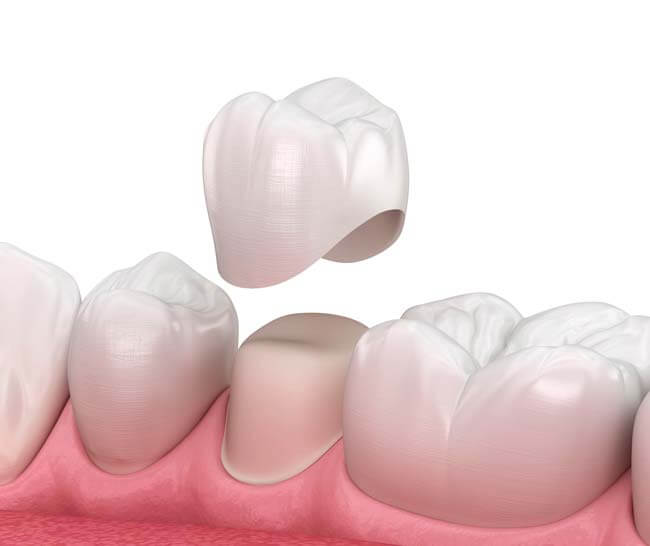
- Dental crown: When a tooth is more seriously damaged, a crown can act like a protective cap to restore its strength and prevent further problems.
- Root canal treatment: If the damage reaches the nerve, your dentist can remove the infected soft tissue, save the tooth, and usually protect it with a crown.
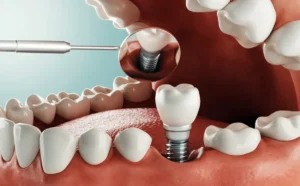
- Extraction: If the tooth can’t be repaired, removing it may be the best option. It can then be replaced with an implant, bridge, or denture to restore your smile and chewing function.
- Filling or onlay repair: Sometimes, the issue is simply a broken filling, and replacing it is enough to solve the problem.
Addressing A Chipped Tooth And Getting Dental Care At Olive Dental Solutions

At Olive Dental Solutions, we know that dealing with a broken or chipped tooth while traveling can be stressful and uncomfortable. That’s why we make the process as smooth and reassuring as possible for our international patients. From the moment you walk through our doors, our team takes the time to understand your situation, explain your options, and recommend the treatment that’s right for you.
Whether it’s a quick fix with composite bonding, a protective crown, or more advanced care, we’re focused on relieving your discomfort and restoring your smile with compassion and expertise. With transparent treatment plans, personalized attention, and ongoing support, you can feel confident knowing you’re in good hands every step of the way.
Is a Tooth Cutting Your Tongue Causing You Problems?
Most sharp teeth or chipped teeth that are rubbing the tongue are urgent issues, but not life-threatening. You will need to get some professional help within a few days to prevent the risk of getting ulcers or infections.
Get immediate dental care, same-day or the next day, if you’re experiencing:
- Uncontrolled bleeding from the tongue or gums
- Severe swelling in the face, jaw, throat, or the area under your tongue
- A fever or spreading infection
- A severe throb of pain that doesn’t seem to improve
- A pink or red patch on the tongue, which suggests the nerve is exposed
- Trouble swallowing, or you can’t close your mouth comfortably
But if the pain is relatively mild, the bleeding is under control, and the cut to your tongue is small, dental wax, soft foods, and some temporary fixes are usually safe until you can get to your dentist.
What Happens If You Ignore a Tooth Cutting Your Tongue?
- Short-term risk: Constant rubbing can cause painful ulcers on your tongue, lips, or cheeks, making eating and speaking a real pain.
- Infection risk: If the cut is small but lets bacteria in, you can develop bad breath, swelling, and in some cases an abscess.
- Tooth risk: A broken or chipped tooth that’s left untreated can start to develop deeper cracks or decay, which could turn a simple repair into a crown, root canal, or extraction.
- Bite risk: If the tooth is uneven, it can put a strain on the jaw, give you headaches, and chip the teeth around you.
- Persistent lesion risk: If the ulcer doesn’t heal within about three weeks, get it checked out.
Everyday Habits to Stop Broken Teeth in Their Tracks
Lots of patients can reduce the most common causes of broken or chipped teeth with a few simple habits:
- Avoid putting ice directly on your teeth, as well as pens, popcorn kernels, hard candies, or trying to open packages; they’re all recipes for disaster.
- If you have bruxism, get a custom night guard to protect your teeth.
- Wear a fitted sports mouthguard if you play any contact sports.
- Make sure you get regular dental check-ups every 6-12 months so your dentist can catch any worn fillings, loose crowns, or tiny hairline fractures early on to prevent complications.
- Brush your teeth twice a day with fluoride toothpaste and floss once a day. Maintain good oral hygiene to lower your risk of tooth decay.
FAQ
Will a Sharp Tooth Edge Fix Itself?
No, your enamel doesn’t regrow and can’t self-polish.
- The tongue might get used to it, but the sharp edge remains.\
- A dentist will need to smooth, bond, fill, or crown the tooth.
How Long Can I Wait to See a Dentist for a Chipped Tooth Cutting My Tongue?
If it’s just a small chip with mild irritation, it’s usually okay to wait a few days with some dental wax and soft foods. But get same-day professional care if you’re in a lot of pain, if swelling appears, the break is deep, or bleeding won’t stop.
Can I Sleep With Dental Wax on My Sharp Tooth?
Yes, orthodontic or dental wax is usually safe overnight. Just use a small amount, press firmly onto the tooth, and replace it every day to keep the area clean.
Will a Tongue Cut From a Broken Tooth Leave a Scar?
In most cases, minor tongue cuts will heal within 7-10 days once the sharp edge is dealt with. But if it’s deeper, infected, or takes longer than three weeks to heal, you’ll need a dentist or doctor to have a look.
Do All Broken Teeth Need a Dental Crown?
Not at all, a small chip might just need smoothing, and a moderate break might be restored with some composite bonding. If it’s badly broken, has large fillings, or is likely to crack further, a crown will probably be recommended. But until you see your dentist, don’t take any guesses, use any pictures you find online for reference only, and your own dentist needs to have a look in your mouth to decide the best course of action.