
A mouth guard is a total game-changer; it protects your teeth from grinding, clenching, sports impact, and that nagging pressure from a bad bite. But that constant contact with your teeth and gums can lead to some pretty unsavory stuff building up, think saliva, plaque, bacteria buildup, and a whole lot of nasty odour, if you don’t clean it properly.
So, if you’re wondering how to clean those pesky mouth guard appliances without causing them any damage, the good news is that it’s a straightforward process: just rinse it, give it a gentle scrub with a soft-bristle toothbrush, let the mouth guard dry completely, and stash it in a clean case. Simple enough, right? The thing is, some things matter a bit more than others. I mean, hot water? Bad idea. Harsh toothpaste? No way. And for goodness’ sake, don’t even think about storing it in a damp case. That’ll shorten its lifespan or affect how it fits in no time.
Daily Cleaning Tricks for a Clean Mouth Guard
Daily cleaning is a must for any type of mouth guard (that includes night guards, sports guards, and custom bite guards). If you skip it, you’ll end up with a buildup of gunk, a bad smell, discoloration, and a whole lot of discomfort.
- Get your mouth guard nice and clean by rinsing it with some cool or lukewarm water.
- Gently brush it with a soft toothbrush. If your dentist recommends it, you can use a tiny bit of dish soap, but that’s about it.
- Rinse it under the tap to get rid of any soap or debris.
- Let it air dry on a clean surface; don’t even think about wrapping it up damp.
- Finally, stash it in a clean, well-ventilated case.
Do this every day, and your mouth guard will stay fresh, smooth, and super comfortable.
Cleaning Your Mouth Guard Daily, Step by Step
Get your mouth guard in the water immediately after you take it out and give it a gentle rinse with some cool or lukewarm water. If your dentist says it’s okay, you can give it a gentle scrub with a soft toothbrush and a small amount of mild soap. Rinse it under the tap really well, then let it air dry on a clean surface. Don’t store it in a damp case, or you’ll be sailing into trouble. Finally, chuck it in a clean, ventilated case once it’s dry and ready for next use.
Toothpaste and Mouth Guards: Are They BFFs or Enemies?
You might be thinking, “Hey, toothpaste is what I use on my teeth, right? It’s obvious!” and that’s a fair point. But here’s the thing, toothpaste isn’t always the best choice for mouth guards. Whitening or gritty toothpastes can be too harsh and scratch the surface of your guard, making it feel rough and leaving it open to stains and smells. If your dentist says it’s okay to use nonabrasive toothpaste, go for it, but avoid gritty or whitening formulas and otherwise stick with a mild soap or a special appliance cleaner. Gentle is good, harsh isn’t.
How Often Should You Be Deep Cleaning Your Mouth Guard?
Regular cleaning is a must, but deep cleaning is a different story. That’s when you need to bring out the big guns and give your guard a good soak to get rid of the really tough buildup that’s been hiding under the surface.
Some people get away with a weekly deep clean, but this typically depends on how often you wear the guard and your dentist’s advice. If you wear a night guard every night, you might need to deep clean it more regularly than someone who only wears a sports guard on the weekends.
But one thing’s for sure: don’t even think about “sanitising” with strong products, that’ll do more harm than good!
Safe Deep Cleaning Options
Effervescent mouthguard or denture cleaning tablets can be a good option, but only if your dentist says it’s okay; for a deep clean, soak your mouthguard in the solution for 10-15 minutes. So are dentist-approved appliance cleaners; just be sure to follow the instructions to the letter.
You can combine one part white vinegar with three parts water and soak it for 15-30 minutes to help break down mineral deposits and kill bacteria, but be sure to rinse it really well afterwards. And if all else fails, a little bit of mild soap and water is usually enough to do the trick, but remember, never mix products unless your dentist says it’s okay.
Hydrogen Peroxide and Mouth Guards: Can They Be BFFs?
A hydrogen peroxide soak can be used for a deep clean by mixing equal parts hydrogen peroxide and water, but it’s not always the best choice for mouth guards. Start with 10 minutes and limit soaking to about 10-30 minutes, since longer exposure can end up damaging the material and changing the way it fits, which isn’t exactly what you want! If you have a custom-made guard or one that’s designed to protect your dental work, be especially careful; in fact, it’s probably best to check with your dentist before using hydrogen peroxide at all.
Cleaning No-Nos for Mouth Guards
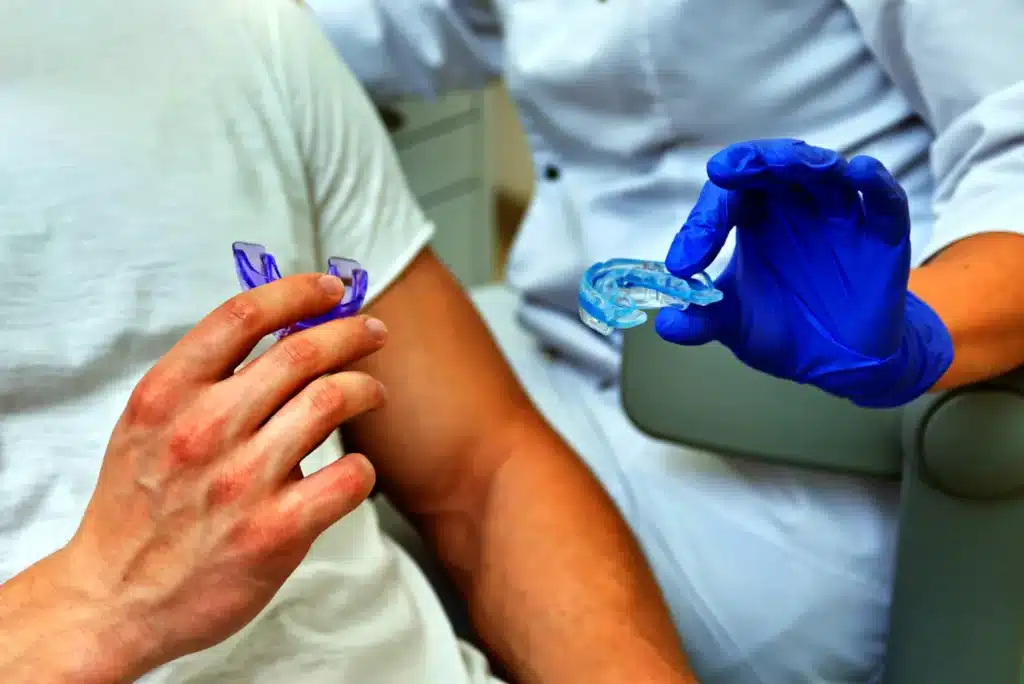
When your mouth guard starts to smell bad or goes cloudy, resist the temptation to scrub it with harsh chemicals. Using aggressive methods can easily warp, scratch, dry out, or leave behind irritating residues on an appliance that’s specifically fitted to your teeth and bite.
Leave the harsh cleaners and abrasive products well alone; no hot water, bleach, alcohol mouthwash, abrasive toothpaste, dishwashers, microwaves, or boiling water unless you’re molding a new guard.
Bleach is just too harsh for something you wear in your mouth, alcohol can dry out and weaken certain materials, and heat from a dishwasher or microwave can warp the guard into a permanent shape. Also, don’t exceed the recommended soak times; keep within the stated limit, because problems can happen if you leave it in too long, not just add extra stress to the material.
Why Hot Water Can Ruin the Fit of Your Mouth Guard
Hot water can cause mouth guard material to soften and warp, and heat sources such as steam can do the same. And even a small change in shape can make the guard sit differently on your teeth. That’s a big deal, because the fit is one of the things that makes this appliance protective in the first place.
A mouth guard that’s warped may feel tight in one spot and loose in another. It can create pressure points, rub your gums, or stop covering your teeth properly. And if you wear it for grinding or clenching, damage can make it less effective while increasing hygiene risks as well.
If your mouth guard suddenly starts feeling different after cleaning, stop using it until you’ve had a dentist take a look. Don’t try to bend it back into shape either. That can just make the damage worse.
How to Store a Mouth Guard So It Stays Fresh
Storing your mouth guard the right way is just as important as cleaning it properly. A mouth guard that’s been cleaned well but stored while damp can still start to smell, develop residue, and build up. And moisture is the enemy here.
After cleaning, rinse the guard with cool water, then let it air dry completely before putting it in the case. While it dries, set it on a clean flat surface, and keep it away from pets, kids, direct sunlight, and heat. Pets seem to have a particular fondness for chewing on mouth guards, for some reason.
Once it’s dry, store it in a ventilated case. A case with airflow will help reduce the moisture that can get trapped. Avoid putting it in sealed plastic bags, napkins, or closed containers that don’t let it breathe.
Also, try not to just leave the mouth guard loose in a bathroom drawer. Bathrooms can be humid, and the steam can keep the guard from drying fully, while drawers get cluttered with dust, hair, and all the rest. A clean case will give your guard a safer place to rest between uses.
Don’t Forget to Clean the Case
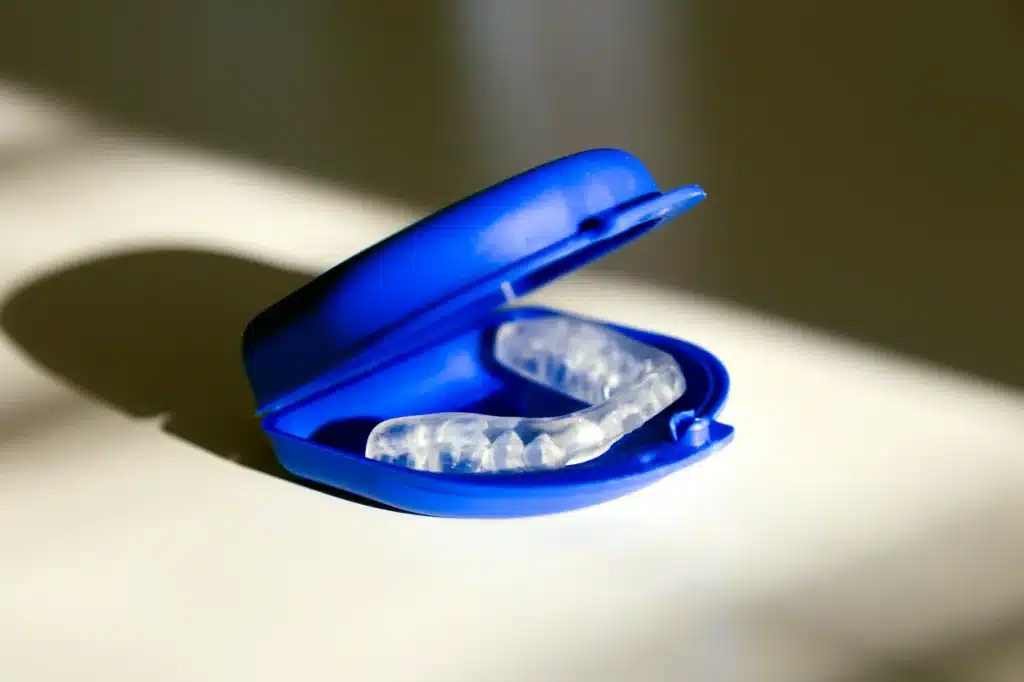
A dirty storage case can cause contamination of your clean mouth guard. If you put a freshly cleaned appliance into a case that’s got old moisture, buildup, or stinks, the cleaning routine just isn’t going to be as effective.
Wash the case weekly with warm, soapy water. Rinse it thoroughly, then let the storage case air dry completely before putting the mouth guard back inside so bacteria do not transfer back onto it. This is a small habit that can make a big difference in how fresh your mouth guard stays.
Replace the case if it gets cracked, stained, sticky, or smells bad even after washing. A case is pretty cheap compared with a custom mouth guard, so it’s just not worth holding onto one that’s no longer staying clean.
How to Get Rid of Bad Smells or Cloudy Buildup
Bad smells usually come from saliva, harmful bacteria, plaque, or storing the mouth guard while it’s still damp. Cloudy buildup can come from minerals, dried saliva, or plaque-like residue that didn’t get fully removed during your daily cleaning routine.
Start by going back to basics. Rinse the guard after use, brush gently, let it dry completely, and clean the case. If the smell starts to clear, the problem was probably just run-of-the-mill buildup.
If the smell or cloudy film persists, try a dentist-approved deep cleaning method. A cleaning tablet or oral appliance cleaner may be just what you need, depending on what your guard is made of. You can also soak it in alcohol-free mouthwash diluted with warm water for about 30 minutes to use its antimicrobial properties, though if your guard’s care instructions take a more cautious approach, keep the soak to just a few minutes. A baking soda paste is another option to help reduce odor and remove debris. Just make sure to follow the instructions to the letter, especially in terms of soak time.
And don’t even think about trying to scrape off the buildup with sharp tools. That can scratch the surface and just make it easier for residue to come back. If the buildup feels stuck, rough, or just impossible to remove, it’s probably best to let a dental pro take a look.
When Smell Means It’s Time to Get a New Mouth Guard
If your mouth guard still smells bad after you’ve cleaned it properly, it may be nearing the end of its useful life. Odor can also point to a dirty appliance that may harbor bacteria, not just an old one, especially when the material is scratched, porous, or breaking down from long-term wear.
Research published in Sports Health found that mouthguards can carry bacteria, yeasts, and molds linked to oral infections, respiratory problems, and other health issues.
The Academy of General Dentistry also warns that contaminated guards are associated with staph- and strep-related risks, which can contribute to gum infections, tooth decay, bad breath, gum irritation, and even broader health issues if microbes enter your bloodstream through small cuts in your mouth.
Other signs that it’s time to get a new one include visible cracks, holes, rough edges, deep stains, yellowing, a loose fit, discomfort when you wear it, or material thinning, especially in heavily used night guards. If your teeth or jaw start to feel sore in a new way, that’s worth checking out too.
A mouth guard should be protecting you, not creating new problems. If it feels unstable, painful, or unpleasant, no matter how well you clean it, replacement is probably the way to go.
When to Get a Dentist to Take a Look at Your Mouth Guard
Cleaning your mouth guard is one thing, but even the best way to clean it can’t fix every problem. If the guard no longer fits, feels rough, causes soreness, or fails to protect your teeth, it’s time to get a dentist to take a look. This is especially important if you wear a mouth guard to help with grinding, clenching, or TMJ-related discomfort, or to protect your dental work. A mouth guard that doesn’t fit right can make for a pretty miserable experience and may not even do its job.
If your store-bought guard is still giving you headaches, jaw pain, sensitivity, or tight facial muscles, you should probably ask for help. These symptoms could be a sign that you need a more tailored approach, either a custom-fitted mouth guard or a different solution altogether.
At Olive Dental Solutions in Tijuana, where many of our patients from the U.S. and Canada fly in for dental care, our dental team would be happy to answer questions about cleaning and replacement during an exam or consult, along with advice on custom mouth guards, biting issues, and TMJ problems, and any of your broader dental concerns, all through our Free Virtual Diagnostic. We also offer bilingual staff, state-of-the-art equipment and materials, and help with getting here and getting settled.
Lots of our patients come to us because they can get a clear understanding of what they need, without breaking the bank. And yes, the cost is a big part of it, but it’s also about getting good information and saving a bundle compared to back home in the States.
Custom Mouth Guards vs. Store-Bought Guards
Store-bought mouth guards are okay for a quick fix or casual protection, especially if you’re playing sports, but for long-term grinding or clenching or bite issues, a custom mouth guard is generally a better option.
Custom mouth guards are made from molds or scans of your mouth so they fit your teeth perfectly. That makes them way more comfortable and less likely to shift out of place. And because the fit is tailored to your bite, they can last for years with proper care, too.
Store-bought guards can feel clunky, loose, or just plain off. Many boil-and-bite or stock guards also need replacement within 12 months, depending on wear. If you chew through it right away or can’t sleep with it, that’s probably a sign you need something a little more advanced.
A dentist can also help figure out if your discomfort is really a mouth guard thing or if something deeper is going on. Sometimes jaw pain, worn-down teeth, or tooth sensitivity can be connected to a deeper issue like your bite being off, damaged restorations, or grinding.
A Clean Mouth Guard Protects Your Smile, And Your Sanity
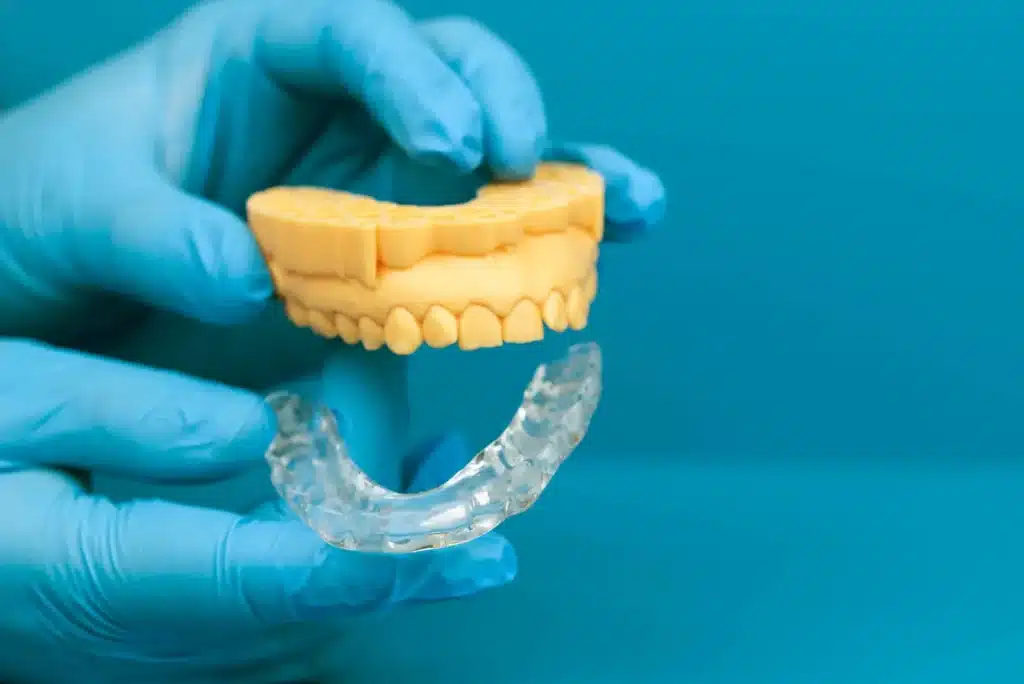
A clean mouthguard is more comfortable, more hygienic, and easier to maintain. To clean your mouthguard, rinse it after every use, brush it gently, use a mild cleaner, let it dry all the way, and pop it in a clean case.
Deep cleaning can be a good idea, but do it carefully. Avoid hot water, bleach, any cleaners with alcohol, rough toothpaste, and things like dishwashers & microwaves. Strong doesn’t mean safe.
If your clean mouthguard still smells bad after a good clean, is loose, cracked, or worn, it may be time to replace it, because damaged guards can harbor bacteria and stop providing reliable protection. Olive Dental Solutions can help you out with that.
Get Your Free Quote and start getting straight answers about your needs, costs, travel support, and the best next step for your teeth.
FAQ
Can I clean my mouth guard with toothpaste?
Only if it’s a non-abrasive one and the dentist says it’s safe.
How often should I clean my mouth guard?
Clean it every time you take it out. If it is a night guard, make rinsing, brushing, and storing it part of your morning routine as part of a regular cleaning routine, then deep clean it now and then as recommended by your dentist.
Can I soak my mouth guard in mouthwash?
Not with all mouthwashes, especially the ones with alcohol, so check with your dentist or the instructions first.
Why does my mouth guard smell bad?
It’s usually just down to saliva, bacteria, plaque, or storing it while it’s damp. A dirty guard can also contribute to bad breath and gum irritation, and some contaminated guards have been associated with hundreds of microbes. Cleaning the case and making sure it’s bone dry can help cut down on the smell.
How do I know when to replace my mouth guard?
Time to get a new one or look at a custom-made one if it is cracked, loose, stained, rough, warped, smells bad even after a good clean, or is just not feeling right. Your dentist can help you figure out if you need a new one or just a simple adjustment.