

Dentures are a type of dental appliance that work amazingly if you want to replace missing teeth and restore both your smile and chewing function, whether you’re missing some or all of your teeth; yet, many patients wonder if its ok to sleep while wearing dentures.
Below, we will discuss what your dentist will tell you and why it is important to take your dentures out at night in the long term.
So, Can You Sleep With Your Dentures In?
You can sleep with your dentures in, but it is not advised that you do this every night. They are removable prosthetic devices designed to be taken out while you sleep.
You should begin taking them out every night after you have gotten used to your dentures (about 24 hours – 72 hours after having natural teeth removed or getting your dentures).
Here are some reasons why you should not be wearing dentures overnight:
- Denture Stomatitis (red, irritated gums under your denture)
- Gum inflammation and irritation.
- Faster denture wear
Besides oral health problems, sleeping with dentures puts you at a higher chance of contracting pneumonia (when studying 524 elderly people who were approximately 87.8 years old. They had a 2.38 hazard ratio of pneumonia if they slept with their dentures.) You may want to sleep with your dentures the first night or two if you got immediate dentures. Otherwise, you should not be sleeping with your dentures every night.
How Removing Dentures at Night Protects Your Oral Health
Not only does it harm your dentures, but it can also harm your mouth. Leaving dentures inside your mouth at night allows bacteria and debris to sit on your gums. This can lead to many different long-term oral health issues, including bad breath, gum disease, and tooth decay on your natural teeth remaining in your mouth. Your body produces less saliva when you sleep, which can allow bacterial buildup in your mouth and dentures.
Sleeping with your dentures in also puts you at risk of developing denture stomatitis, which is an inflammation that can occur when you sleep with your dentures in, and as stated before, there have been studies that show that elderly people who sleep with their dentures have a higher chance of contracting pneumonia.
Another reason why you should take your dentures out at night is that they can cause gum irritation and bone resorption due to constant pressure, and as your jaw changes, your dentures may start to feel loose, and ultimately it can change your facial structure as well.
Key Benefits of Sleeping Without Dentures
By taking your dentures out at night, you are allowing your gums to rest. Not only will your gums benefit, but your dentures will as well.
- Helps prevent gum inflammation
- Helps prevent infection and bad breath
- Your dentures will last longer
- You will feel more comfortable when sleeping
- Allows you to see if there are any issues with your gums or dentures
- Allows you to have better overall oral health
Taking your dentures out every night and cleaning them is the best thing you can do for your mouth and dentures. Always follow what your dentist recommends on how to care for your dentures.
When Might It Be Okay to Sleep With Dentures In?
As mentioned above, you should not be sleeping with your dentures in every night. There are some instances where you may need to wear your dentures at night.
If you just had your teeth removed and received immediate dentures, your dentist will most likely have you wear your new dentures for the first 24 hours (could be up to 72 hours). Wearing your immediate dentures will help with swelling and allow your mouth to adjust to the shape of your dentures.
Some people may feel uncomfortable taking their dentures out when they are with their significant other or caretaker. If you decide to sleep with your dentures in, make sure you are properly caring for them and cleaning your mouth the next morning.
There are also certain types of prosthetic devices that are meant to be worn at night. These are used to help with your jaw position while you sleep. Make sure to speak with your dentist if you are thinking about sleeping with your dentures in.
Best Practices for Nighttime Denture Care
Making sure you take care of your dentures at night will help prevent bacterial buildup and keep your gums healthy. Always try to take your dentures out at night, but if you cannot, here are some tips to help you.
Step-by-Step Nighttime Denture Care Routine
- Take your dentures out of your mouth: Make sure to place a towel in your sink so you do not break your dentures if you drop them. Rinse your mouth with warm water and remove your dentures. Do not force them out of your mouth.
- Clean your dentures regularly: Use a soft toothbrush and clean them with a denture cleaning solution. Do not use whitening toothpaste or any other chemicals that could damage your dentures.
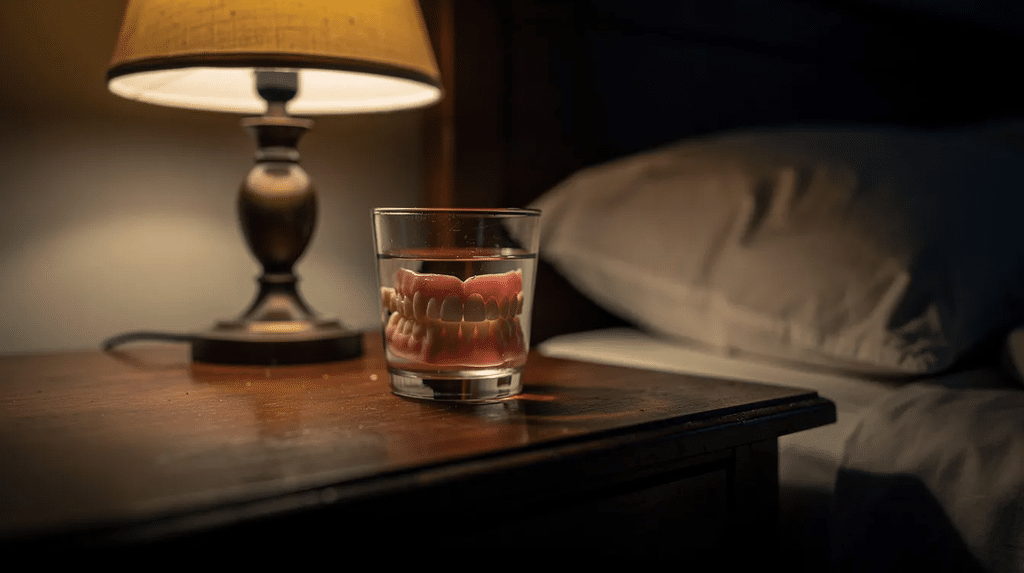
- Leave your dentures in water: Make sure to leave your dentures in water or a denture cleaner solution overnight. Follow the directions that came with your solution.
- Maintain good oral hygiene: Make sure to gently brush your gums, tongue, and remaining natural teeth with a different soft-bristled toothbrush.
- Visit your dentist regularly: Go to your scheduled dental appointments and get regular cleanings so they can remove plaque on your remaining natural teeth.
If you notice any issues with your dentures or you develop sore gums, contact your dentist so he can make the proper adjustments.
If You Occasionally Sleep With Your Dentures
- Make sure your dentures fit properly.
- Always make sure your dentures are cleaned before putting them back in your mouth.
- Drink plenty of water if you have dry mouth
- Do not use too much denture adhesive to help your dentures stay in
- If you have any questions about your dentures or notice anything unusual, contact your dental professional.
Taking your dentures out at night and following these steps will help you have healthy gums and dentures that last longer.
How Nighttime Habits Affect Denture Longevity
There are many factors that will determine how long your dentures will last. One study found that the average lifespan of a denture was 10.06 years. If you continue to wear your dentures 24 hours a day, they will not last as long.
When you wear your dentures all day and night, they will crack, and your teeth will wear down. By soaking your dentures at night, you are allowing them to relax and not dry out.
Build-up of plaque and tartar on your dentures will also cause them to stain and smell. Taking your dentures out at night and cleaning them will help with all of these issues.
It is recommended that you see your dentist at least once a year. Your dentist will make sure your dentures fit properly and monitor any bone loss that may be occurring. If you wait too long to see your dentist, you will end up having to get your dentures relined or replaced, which will cost you more money.
By taking care of your dentures at night, you are ensuring that they will last longer and you will have a smile that you are happy with.
FAQ
What should I do if I accidentally slept with my dentures in?
Take your dentures out in the morning and clean them with a non-abrasive denture cleaner. Brush your gums and tongue, and if you have any questions, contact your dentist.
Do the same rules apply to partial dentures at night?
Just like with full dentures or the removable prosthetic devices, you should take your partial dentures out at night. This will help your gums and teeth stay healthy.
When should I talk to a dentist about my nighttime denture routine?
If you have any questions about cleaning dentures nightly, or you notice any redness or sore spots in your mouth, you should contact your dentist.