
Dentures can quickly pick up stains, making you wonder, “Can dentures be whitened the same as regular teeth?” Truth is, it’s not that simple. While you can’t whiten dentures like natural teeth, you can definitely remove surface stains and bring back a bit of their original brighter shade to brighten your smile once again. Here’s what actually works, what to avoid, and when to seek professional advice.
Can You Whiten Dentures as Easily as Natural Teeth?
No way. The thing is, dentures don’t have enamel or living tissue. So all those peroxide-based whitening gels and strips that are used in teeth whitening procedures to oxidize pigments inside your enamel? They have zilch effect on acrylic resin, porcelain, or composite denture and dental implant materials. And don’t even get started on standard whitening toothpaste; they’re just as useless on dentures. Bleaching agents just don’t penetrate or lighten the materials they’re made of.
Safe Ways to Look After Your Dentures and Prevent Discolouration
Keeping your dentures looking their best requires a bit of daily TLC, proper storage, and good habits to stop them going yellow in the first place. While at-home care can sort out surface stains and plaque, it can’t actually make your false teeth any whiter than they were when they were first made.
Daily Cleaning and Preventing Denture Stains
- Gently brush your dentures each day: Use a soft bristled or a denture brush with a non-abrasive denture cleaner or a mild soap, this can help lift stains and remove food particles off them. Don’t go for regular toothpaste or those whitening products, or you might scratch the surface.
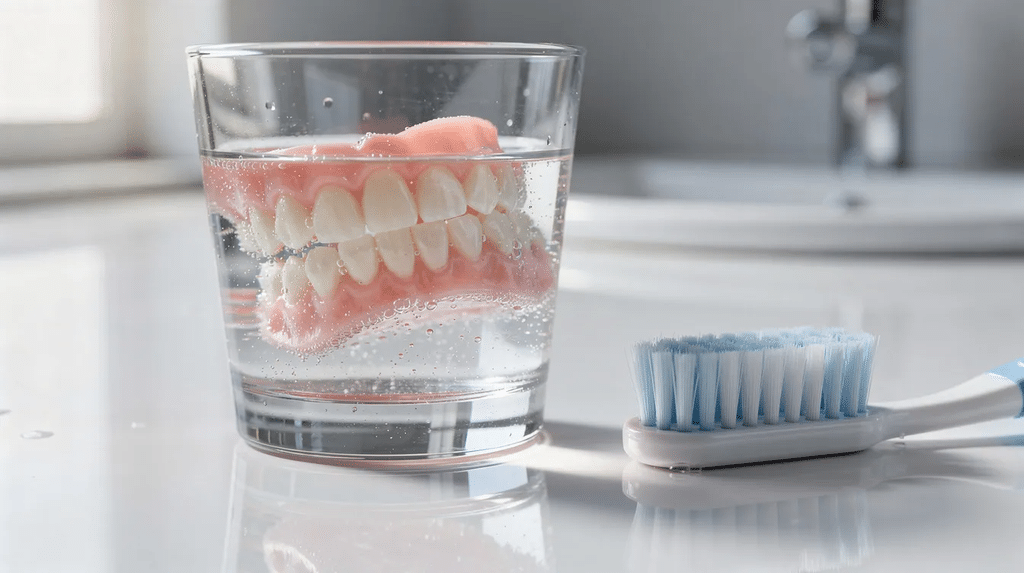
- Soak your dentures overnight: Pop them in some clean, cool water or the right denture solution and follow the instructions. Just make sure you’re not damaging them.
- Rinse after meals: Rinse them off after you’ve had any coffee, tea, red wine, cola, berries, tomato sauce, or any other stain-causing foods and drinks. This will help keep them looking their best.
- Limit the staining foods and drinks: Try to cut back on those highly pigmented foods and drinks; it’ll make all the difference.
- Don’t go for homemade remedies: Sorry, those vinegar and baking soda solutions can do more harm than good. Talk to your dentist before trying any alternatives.
- Take care of your gums and tongue: Clean them out each day to keep the bacteria at bay.
- Schedule regular dental checkups: Get a professional whitening to get rid of those tough stains, and your dentist can check for any wear and tear and let you know if it’s time for a new set.
Daily brushing, proper soaking, rinsing after meals, and regular dental care are the best way to keep your dentures looking their best. If they get really stained or worn, you might need to get them professionally cleaned or replaced.
Dentures That Need a Bit of TLC
Professional denture whitening normally means a good clean and polish, plus maybe a resurfacing, nothing like the bleaching process used on natural teeth. Professional cleaning can get rid of those stubborn stains, though.
- A dentist or hygienist will use specialized cleaning tools, ultrasonic cleaners, special bleaching products, and special polishing paste to remove stains that otherwise won’t budge
- Dentists usually recommend patients get a cleaning every 6 months, and it’s quick, usually just a few minutes.
- If your dentures get really yellow or stained, they might suggest re-polishing the teeth, re-basing the denture, or making you a new set. If they’re really bad, it might mean you need a new set altogether.
- Get an appointment if stains persist, if they smell bad, or if the surface feels rough.
- Don’t try to whiten them yourself; certain products marketed online may not be suitable for your denture material.
Methods and Products to Avoid
Trying to whiten your dentures the wrong way can damage them for life. Don’t go for stronger, go for gentle.
- Avoid using whitening strips, hydrogen-peroxide trays, strong whitening gels, or any product designed for natural teeth; they won’t work and may damage them.
- Don’t soak them in household bleach, chlorine cleaners, or lemon juice; they can cause the material to weaken or change colour.
- Hot water can warp them, so only use cool or warm water.
- Harsh toothpaste can scratch them; even a tiny scratch can trap bacteria and make them look worse. No metal brushes or scouring pads on false teeth!
- Can they survive one bad cleaning? Maybe, but a single scratch can do permanent damage.

FAQ
What if my dentures are still yellow after professional cleaning?
Persistent discoloration may require professional polishing, resurfacing, or denture replacement. Your dentist can recommend the best option.
Is it safe to leave dentures in denture solution all day?
Not necessarily. Some solutions aren’t designed for prolonged soaking. Follow the manufacturer’s instructions and your dentist’s recommendations to prevent damage.
Can partial dentures be whitened the same way as full dentures?
Both can be cleaned to remove surface stains, but partial dentures with metal clasps require special care. Avoid bleach and use a cleaner approved for their materials.