
Dental implants are a serious investment in your smile, and choosing the right mouthwash can make the difference between having long-term success of a healthy, functioning implant or dealing with costly complications. With so many options stacked on pharmacy shelves, picking a rinse that actually protects your implant site can be a bit of a puzzle.
- If you’re looking for a mouthwash that’s going to be gentle on your implants in the early going, an alcohol-free rinse with some real antibacterial punch is usually your best bet, especially in the first 2-4 weeks after surgery.
- After the initial surgery, chlorhexidine or cetylpyridinium chloride are the standard go-to options for a while, then many people switch to a gentler daily mouthwash that’s also alcohol-free.
- High levels of alcohol in your mouthwash can make your mouth feel seriously dry, irritate your gums, and maybe even slow down how well your implant heals and stays healthy.
- At the end of the day, what makes the best mouthwash for dental implants for you is all about timing. Are you looking for something to use right after surgery, or as a long-term solution? And what about your gum sensitivity? Or any existing issues like bad breath or gum disease?
- And always, always follow the advice of your own dentist or oral surgeon; they’ve got the inside scoop on your specific implant procedure.
Why Your Mouthwash Matters To Keep Your Dental Implants Healthy
Dental implants are a great option to replace missing teeth, and can last for a decade or more, but only if you’re taking good care of them by brushing and flossing, and choosing the right mouthwash. An implant is basically just a titanium post stuck in your jawbone, an abutment to connect it to the surrounding bone, and a fancy dental crown on top. When all the nasty bacteria start to accumulate in those tiny spaces around the implant and under the gumline, you start to get peri-implantitis, a nasty gum and bone infection that can be a leading cause of implant failure.
A good mouthwash adds an extra layer of protection to your daily oral care routine, reaching all the little nooks and crannies around your implant that a toothbrush or floss might miss. It helps cut down on plaque and bacteria around your implant, which is super important for keeping your whole mouth healthy. And that’s especially true for people who struggle with bad breath, a dry mouth, or a history of gum disease; they usually get a lot out of adding a good mouthwash to the mix.
Can You Use Mouthwash Right After Dental Implant Surgery?
The general rule of thumb is to steer clear of mouthwash for the initial healing period, that’s at least 24 hours after surgery, and then just use whatever your surgeon recommends. The first day is all about letting that blood clot at the surgical site do its thing, so you don’t go disturbing it.
From day one to seven, many surgeons recommend using gentle warm salt-water rinses and a prescribed anti-bacterial mouthwash to keep infection risk at bay. Chlorhexidine mouthwash is often the go-to option after surgery because it reduces plaque by up to 86% and bleeding by up to 73% within a week; that’s some pretty impressive numbers. And using mouthwash can help minimize inflammation during healing, and once the first 24 hours have passed, a saltwater rinse can be really helpful for healing support.
But for the first two to four weeks after surgery, an alcohol-free mouthwash is usually the way to go, because booze can be just plain harsh on tissues that are still healing. Always check the post-op instructions from your clinic; timing depends on just how complex your surgery was, one implant versus multiple sites, bone grafting, or a sinus lift, all change the protocol.
What Makes the Best Mouthwash for Dental Implants?
Finding the best mouthwash for dental implants that will suit you will be all about finding a balance between being able to reduce bacteria, not being too harsh on your gums, and keeping your mouth nice and moist. When it comes to choosing a good mouthwash for implants, look for:
- An alcohol-free formula so you don’t end up with a dry mouth
- Some real antibacterial punch, like chlorhexidine or cetylpyridinium chloride, to help cut down on plaque and help you get fresh breath.
- Gentle formulas that won’t burn or irritate your gums
- Fluoride mouthwash to strengthen your enamel and cut down on plaque
- And of course, an alcohol-free mouthwash will help prevent dryness and irritation around your implant
Certain mouthwashes that need a prescription are a whole different story; they’re for short-term use during that critical post-surgery window, while over-the-counter stuff is designed to be a long-term solution. And let’s be real, a mouthwash that keeps your breath fresh is definitely a plus, especially if it helps you with maintaining proper oral hygiene.
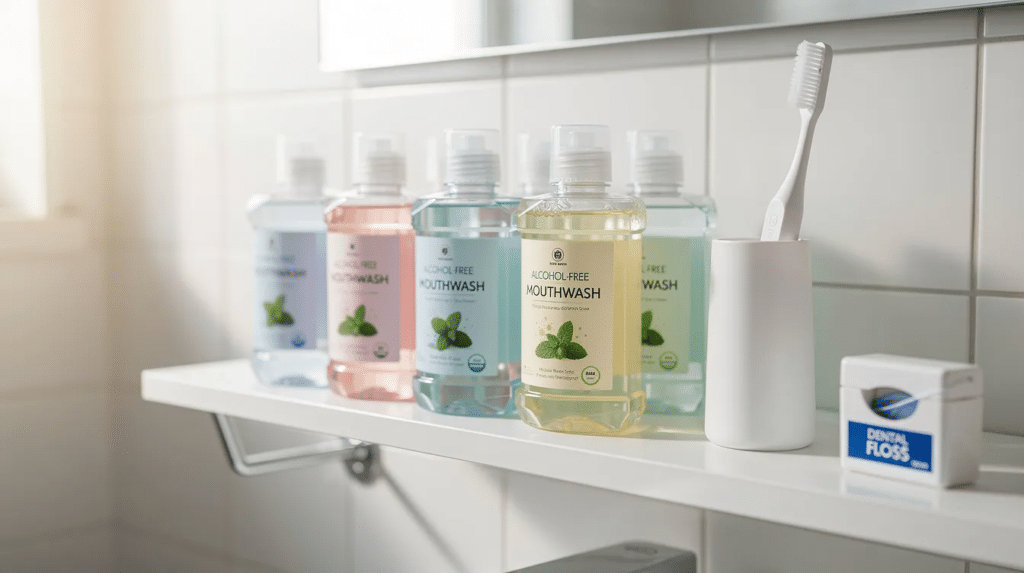
The Lowdown on Alcohol Content vs Alcohol-Free Mouthwash for Implants
A lot of the mainstream mouthwashes out there use a fair amount of alcohol, around 20-25% ethanol, to really knock down harmful bacteria. But to be honest, that level of booze can dry out your mouth and gum tissue, and basically just do the opposite of what you want when you’re trying to heal. And it’s also not what your implant needs in the long run.
| Feature | Alcohol-Based Rinses | Alcohol Free Rinses |
| Bacterial kill | Strong | Comparable with CPC or CHX |
| Taste | Intense burn | Mild, comfortable |
| Tissue irritation | Higher | Lower |
| Dry mouth risk | Significant | Minimal |
| Long-term daily use | Not recommended | Ideal |
Alcohol-free mouthwash is usually a better bet for people with sensitive gums, or anyone who’s had a history of gum tissue recession, burning sensations, or dry mouth from meds or just plain old age. And if you’re still looking for a mouthwash that packs a punch, you can look for non-alcoholic rinses that use alternative antibacterial ingredients instead of ethanol.
Antibacterial Properties to Watch Out For, and Avoid
When picking out a mouthwash for your dental implants, it’s the ingredients that really matter more than the brand image or any claims about a particular flavor.
- Chlorhexidine gluconate (0.12-0.2%): This is the gold standard prescription rinse that gets used right after an implant is put in. Chlorhexidine really knocks out bacteria, but it’s usually just used for a short time. Using mouthwash with chlorhexidine can really reduce plaque around your implants, but there’s a catch: if you use it for too long, it can leave your natural teeth stained and change your taste for a bit.
- Cetylpyridinium chloride (CPC): This is a common ingredient in over-the-counter antibacterial mouthwashes that knocks down plaque and helps keep bad breath at bay with fewer side effects. Research suggests that low doses of chlorhexidine combined with CPC get rid of bacteria almost as well as using strong chlorhexidine on its own, and with less damage, making CPC perfect for long-term daily use with your dental implants.
- Ingredients that help out: Mouthwashes that have fluoride in them help protect your enamel and reduce plaque buildup, while ingredients like xylitol, aloe vera, or chamomile can all help keep your gum tissue healthy and feeling good, and some natural antimicrobial mouthwashes even contain things like tea tree oil, which has antimicrobial properties.
- Ingredients to steer clear of: You want to avoid Sodium lauryl sulfate (SLS), added sugars, and really strong blends of essential oils, which can irritate your tissues or actually help feed the bacteria hanging out near the site of your implant.
Best mouthwash types for different stages of your implants
The right mouthwash changes as you move from right after the surgery into long-term daily care. Your post-surgical mouthwash should be gentle enough not to irritate your sensitive gum tissue at any stage.
- Right after surgery (days 1-14): Salt water and a dentist-prescribed mouthwash to knock out infection, normally chlorhexidine. Don’t swish too hard, we’re trying to prevent infection here. Prescription mouthwashes are often recommended for specific oral health issues during this time.
- As your gum tissue starts to heal (weeks 2-6), you can slowly start transitioning to a gentle, alcohol-free mouthwash with antibacterial properties, like CPC. Don’t use any super-strong mouthwashes with alcohol until your surgeon tells you your soft tissue has fully healed; you might be making things more uncomfortable.
- Long-term care (6-8 weeks and beyond): When your implants are fully healed, you can switch to a daily mouthwash that controls plaque, fights bad breath, and is not going to irritate your mouth at all. A good long-term mouthwash will stay comfortable enough to use twice a day.
If you have a history of gum disease or peri-implantitis, you might need courses of prescription rinses under a dentist’s supervision here and there. Making sure you take care of your implants the right way is key to keeping them in good shape all the way through.
Categories of mouthwashes and some examples you can look at
Not all mouthwashes are created equal, and this guide isn’t here to tell you to use one specific brand over another. Instead, here are some concrete categories so you can discuss your options with your dentist:
- Prescription chlorhexidine rinses (0.12-0.2%): These are the ones your oral surgeon is going to prescribe to you after you get dental implants to cut down on bacteria and the risk of infection.
- Alcohol-free CPC-based rinses: Products like Crest Pro-Health or TheraBreath Healthy Gums use CPC for daily gum health and aren’t going to irritate your mouth.
- Fluoride-enriched mouthwashes that don’t have any alcohol: ACT Total Care is a good option for people with a mix of implants and natural teeth, protecting against cavities and helping with implant care.
- Natural or herbal options: Some mouthwashes are designed to be a little more gentle, with ingredients like aloe or chamomile, but keep in mind that just because it’s natural doesn’t mean it’s also safe or effective, so you should be talking to your dental team about this stuff.
How to use mouthwash safely with your dental implants
It’s not just about the right mouthwash; how you use it makes a big difference, too. Here are some steps:
- Regular brushing thoroughly around the implant, making sure to get the gum line clean, will make a huge difference.
- Floss, using your implant-specific floss or a water flosser to get between your teeth.
- Rinse with mouthwash for 30-60 seconds as directed.
- Don’t swish too hard, particularly in the first few weeks; we don’t want to disturb the healing site.
And don’t forget to use the right mouthwash at the right time. Use your regular, alcohol-free mouthwash once or twice a day, but save the stronger stuff (like chlorhexidine) for when your dentist tells you to use it.
Dealing with dry mouth and bad breath with implants
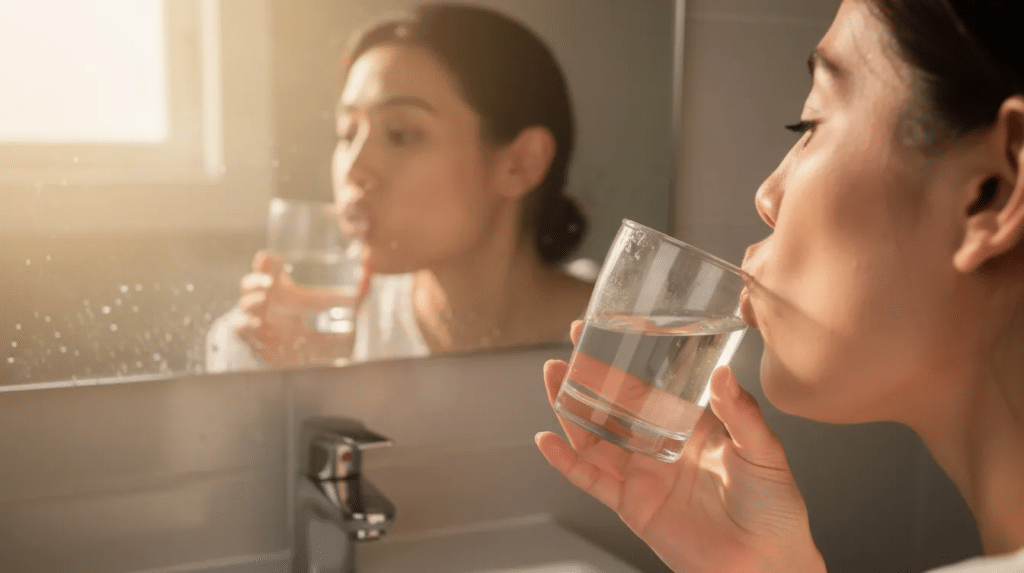
Dry mouth is a real problem; it increases plaque buildup, bad breath, and the risk of peri-implantitis, and is especially bad for older adults or people on a bunch of different medications. If you’re using an alcohol-based mouthwash and you already struggle with this, you’re making things worse. You want to use an alcohol-free mouthwash instead. A great dry-mouth-friendly rinse will have no alcohol in it, possibly xylitol, glycerin, or other moisturising agents. It shouldn’t taste too sharp and won’t burn your mouth. Persistent bad breath around dental implants can be a sign that something is wrong, so if you notice it, don’t just try to cover it up with one of those breath-freshening products. Book in with a dentist and get it checked out instead.
Complementary habits that can help keep your mouth fresh and your implants healthy include sipping water regularly, chewing sugar-free gum, using a humidifier at night, and getting regular cleanings done by your dentist.
Special Situations: Sensitive Gums, Gum Disease, and Peri-implantitis
If you’ve had gum problems in the past, you need to be a bit more careful about what you choose to put in your mouth. People who have a history of gum disease have a higher risk of getting peri-implantitis, which can cause the bone around an implant to start breaking down because of bacteria and inflammation. Not taking good enough care of your teeth can speed this process up.
Choose a gentle mouthwash that doesn’t have any alcohol in it if your gums are sensitive or bleed easily. Some mouthwashes can actually make things worse, especially if they’ve got a lot of strong essential oils in them. If your dentist has told you that you’ve got peri-implantitis, they might prescribe you a special mouthwash to help kill off the bad bacteria. Store-bought mouthwashes just aren’t enough in these cases. And if you’ve got gum problems that have been going on for a long time, make a point of going back to see your dentist every 3-4 months for a check-up.
Daily Implant Care Routine (Where Mouthwash Fits In)
Your mouthwash is just one part of how you look after your implant; you need to do all the usual bits, brush and floss, in order to keep your implant and your other natural teeth healthy.
- Morning: Brush your implant with a soft-bristled toothbrush, then clean around your gumline and do a bit of interdental cleaning before swishing an antibacterial mouthwash around in your mouth for a good 30 seconds to a minute.
- Evening: Do the same thing as in the morning, though it might be worth paying a bit more attention to this because your mouth makes less saliva while you’re sleeping.
- Every 6 months (or more often): Make sure you get your natural teeth and your implant cleaned professionally to catch any problems that might be developing.
If you do the right thing and clean your teeth every day, then you’ll get the best results for a healthy smile. Occasional use of a really strong oral care product just does not measure up to doing the right thing all the time.
When to Talk to Your Dentist About Mouthwash
Your dentist is the best person to give you advice on what to use in your mouth, especially if you’ve got implants. Make sure you talk to them before you start using a new mouthwash.
If you notice any of the following, you should get in touch with your dentist right away:
- Your implant is bleeding, swelling, or hurting
- You’ve got pus or a bad taste, or bad breath that won’t go away, even though you’re brushing your teeth
- You can feel the implant crown coming loose.
When you go to see the dentist, bring your current mouthwash with you so they can take a look at what you’re using. If you’ve got things going on with your health, like diabetes or dry mouth, get advice from both your dentist and your doctor. If you had an implant put in recently, just get their advice on what to use. After all, your mouth will still be adapting from the surgery, and it’s an important time to get in the right habits.
Dental Implants And Mouthwash Guidance At Olive Dental Solutions
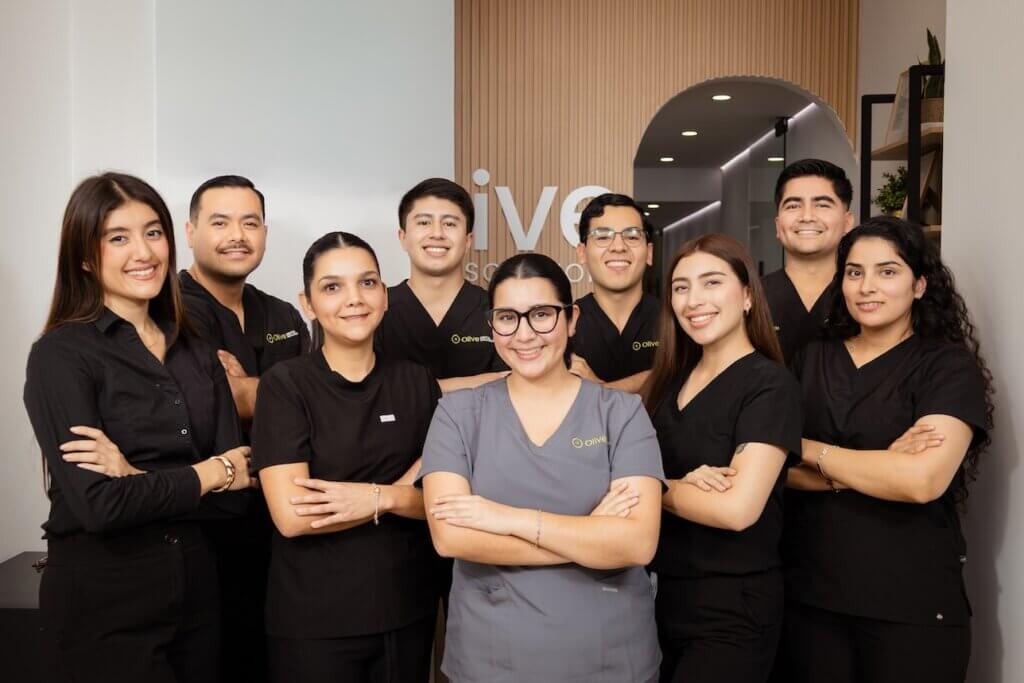
At Olive Dental Solutions, we know that getting dental implants in another country can feel like a big step, which is why we’re committed to supporting you long after your dental implant procedure is complete. We take the time to guide our international patients through every stage of recovery, including recommending the most suitable mouthwash at the right time.
From prescription rinses during the early healing phase to gentle, alcohol-free options for long-term care, we’ll help you choose products to include in your good oral hygiene routine that’ll protect your implants without irritating sensitive tissues. Combined with personalized follow-up recommendations and ongoing support, our goal is to help you heal comfortably, maintain healthy implants, and enjoy your new smile with confidence for years to come.
FAQ
What kind of mouthwash should I use right after dental implant surgery?
In the first little while after surgery, most surgeons will tell you to use either a warm salt-water rinse or a prescription mouthwash with chlorhexidine in it. And just to be on the safe side, steer clear of the kind of mouthwashes that have alcohol in them during this time.
Is it safe to use Listerine with dental implants?
If you like Listerine, some of the formulas have a lot of alcohol in them, which can cause dry mouth and discomfort. If you’ve got an implant, ask your dentist if it’s okay to switch to an alcohol-free version and wait until the surgery has fully healed before you start.
Do I need a special mouthwash forever if I have dental implants?
Most people don’t need to use a prescription mouthwash long-term. What you want to do is get in the habit of using a gentle mouthwash that is alcohol-free and has some antibacterial properties to help keep your gums and implants healthy.
Can the wrong mouthwash damage my dental implant?
The titanium post of the implant is pretty tough, but a mouthwash that is too harsh or has too much alcohol in it can cause problems with your gums and make it harder for your mouth to produce saliva. And if your gums are not healthy, you can increase the risk of peri-implantitis and the implant failing over time. Choose a mouthwash that is okay for your gums, and it’ll help you to keep your implant healthy for a long time.
How soon after using mouthwash can I eat or drink?
Wait at least 30 minutes after using a mouthwash so that the ingredients in it have a chance to do their job and help keep your teeth and gums healthy.