

Retainers spend hours pressed against your teeth, so they can collect saliva, plaque, bacteria, odor, and cloudy buildup faster than most people expect. Even when they look mostly clear, they may still have residue sitting in the grooves, edges, or areas that touch your gums.
The best way to clean retainers is to keep the routine simple, gentle, and consistent. Rinse them after removal, brush them carefully, use a mild or approved cleaner, let them dry, and store them in a clean case. That may sound basic, but it protects the retainer’s fit, freshness, and ability to help keep your teeth in place.
What Is the Best Way to Clean Retainers?
The best way to clean retainers is to clean them as soon as you remove them. Saliva and plaque are easier to remove before they dry, so a quick routine can prevent odor, rough texture, and cloudy buildup later.
Featured snippet answer:
- Rinse the retainer with cool or lukewarm water.
- Brush gently with a soft toothbrush.
- Use mild soap or a dentist-approved retainer cleaner.
- Rinse thoroughly to remove residue.
- Let it air dry completely.
- Store it in a clean, ventilated case.
A retainer should never feel dirty, sticky, or rough when you put it back in your mouth. If it does, the cleaning routine may not be enough, or the retainer may have buildup that needs a deeper clean or professional attention.
Here’s the thing: retainers are not just small pieces of plastic or wire. They are custom appliances designed to help maintain tooth alignment. If they become warped, scratched, or damaged, they may stop doing their job correctly.
Daily Retainer Cleaning Steps
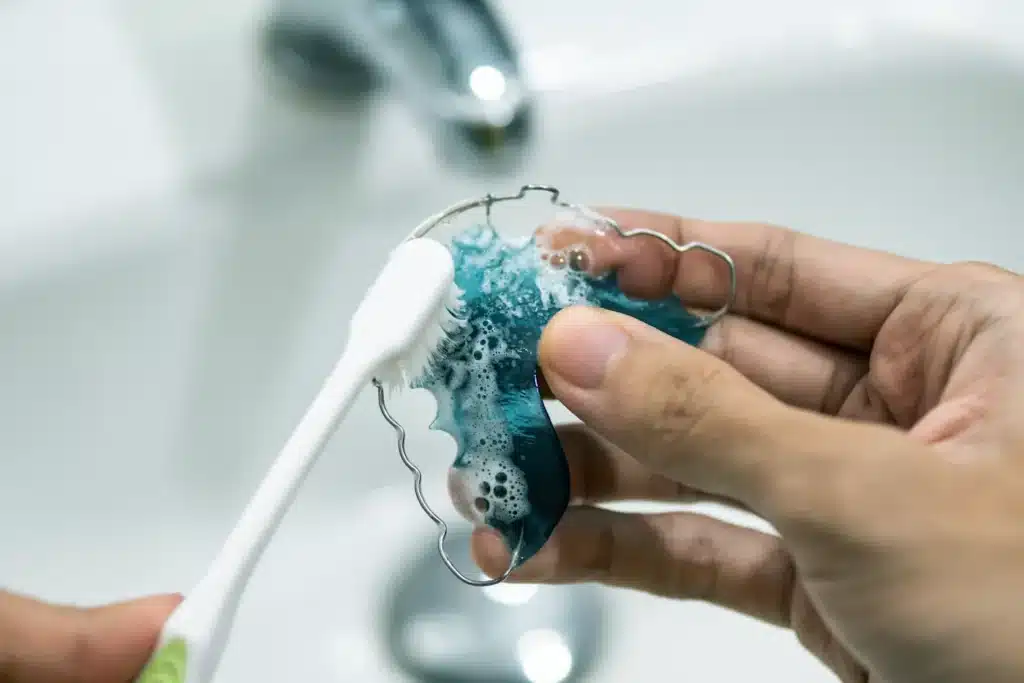
Start by rinsing your retainer with cool or lukewarm water right after removing it. This helps wash away saliva before it dries onto the surface. Avoid hot water because heat can change the shape of some retainers.
Next, use a soft toothbrush to brush the retainer gently. Focus on the areas that touch your teeth, the edges, and any grooves where buildup can collect. You do not need to scrub hard. In fact, harsh scrubbing can create tiny scratches that hold onto bacteria and odor.
Use mild soap or a dentist-approved retainer cleaner if your retainer instructions allow it. Mild, fragrance-free soap is often enough for daily cleaning, but you should rinse very well so no residue stays on the appliance. You do not want soap sitting against your teeth or gums.
After cleaning, let the retainer air dry completely on a clean surface before placing it in the case. This step matters more than people think. A damp retainer stored in a closed case can develop bad smell quickly.
Once dry, place it in a clean, ventilated case. Not in a napkin, where it can be thrown away by accident. Not loose in a backpack. Not on the bathroom counter where it can collect dust or germs.
Why Timing Matters After You Remove It
Cleaning your retainer right after removal is easier than cleaning it later. When saliva and plaque dry, they can create a film that feels cloudy, chalky, or rough. That buildup can also make the retainer smell less fresh.
A quick rinse is better than leaving the retainer sitting out dirty. Even if you do not have time for a full cleaning routine immediately, rinsing it helps prevent residue from hardening. Then you can brush it properly as soon as possible.
This is especially important for clear retainers because cloudy buildup can make them look older and less invisible. It also matters for Hawley retainers, which have acrylic and wire areas where residue can collect.
Truthfully, consistency does most of the work. A simple routine every day usually beats an aggressive deep clean once in a while. Gentle care protects both cleanliness and fit.
How Often Should You Clean a Retainer?
Removable retainers should be cleaned after every use. If you wear your retainer at night, clean it in the morning after taking it out. If you wear it during the day, clean it when you remove it before storing it.
Deep cleaning is different from daily cleaning. Daily cleaning removes fresh saliva and plaque. Deep cleaning helps with buildup, odor, and residue that daily brushing may not fully remove.
For many people, deep cleaning once a week works well, but your dentist or orthodontist may recommend a different schedule depending on your retainer type, buildup level, and oral health needs. Some retainers need gentler care than others, so instructions should not be treated as one-size-fits-all.
Permanent retainers need a different routine because you cannot remove them and soak them. Instead, they need careful brushing around the bonded wire and regular flossing with the right tools. Professional cleanings also matter because tartar can build around fixed retainers.
Nightly Retainers Need Morning Cleaning
Nightly retainers collect saliva and bacteria for several hours while you sleep. By morning, they may look fine, but the surface can still carry residue. Cleaning them right away helps prevent odor and buildup from becoming a regular problem.
Do not place a used night retainer straight into its case. That traps moisture and residue together. Over time, the case may start to smell too, which means your clean retainer can become recontaminated later.
A good morning routine does not need to be complicated. Rinse the retainer, brush it gently, use mild soap or approved cleaner, rinse again, and let it dry before storing. Simple. Repeatable. Worth it.
If your retainer still smells bad after consistent cleaning, that may be a sign of trapped buildup, scratches, or material wear. At that point, deep cleaning may help, but a dental check may be needed if the odor does not go away.
How to Deep Clean Retainers Safely
Deep cleaning is helpful, but it should not replace your daily routine. Think of it as extra support for odor, cloudy buildup, or residue that regular brushing does not fully remove.
A dentist-approved retainer cleaner or cleaning tablet is often the simplest option. Follow the instructions carefully, especially the soak time. Leaving a retainer in a solution longer than recommended can damage some materials or affect the way the appliance feels.
If your dentist says denture tablets are safe for your retainer, they may also be used occasionally. Still, do not assume every cleaning tablet works for every appliance. Clear plastic retainers, Hawley retainers, and other orthodontic devices can respond differently to cleaners.
After any soak, rinse the retainer thoroughly with cool water and let it dry before storage. A deep clean should leave the retainer fresh, not coated with cleaner residue.
Can You Clean Retainers With Vinegar, Baking Soda, or Peroxide?
Some people use diluted vinegar to help with mineral buildup, especially when a retainer looks cloudy or chalky. If your dentist approves it, keep the soak short and rinse very well afterward. Vinegar should not be mixed with other cleaners.
Baking soda is sometimes used for odor, but it can become abrasive if rubbed harshly into the retainer. If used at all, it should be gentle and occasional. Scrubbing with a gritty paste can leave small scratches that trap more buildup later.
Hydrogen peroxide should not become your everyday retainer cleaner unless your dentist recommends it. It may help in some situations, but repeated use or long soaks can affect certain materials. Safer is better.
What Not to Use When Cleaning Retainers
Some cleaning mistakes can damage retainers faster than daily wear. Avoid hot or boiling water, abrasive toothpaste, bleach, alcohol-based mouthwash, dishwashers, microwaves, harsh scrubbing, and long soaks beyond the product instructions.
Heat is one of the biggest risks. Plastic retainers can warp when exposed to hot water, and even a small shape change can affect the fit. A retainer that no longer fits correctly may not protect your tooth alignment well.
Bleach and strong household cleaners should never be used on retainers. They are too harsh for an appliance that sits inside your mouth. Alcohol-based mouthwash can also dry or weaken some materials.
Why Toothpaste Is Not Always Safe
Toothpaste feels like a logical choice, but many toothpastes are made to polish enamel, not plastic. Whitening toothpaste and gritty formulas can scratch clear retainers and make them look cloudy over time.
Those tiny scratches can hold bacteria, stains, and odor. That means a retainer may start smelling bad even when you are cleaning it often. Annoying, right?
Unless your dentist specifically says a certain toothpaste is safe, mild soap or an approved retainer cleaner is usually the better choice.
Cleaning Different Types of Retainers
Different retainers need slightly different care. The right routine depends on whether your retainer is clear plastic, Hawley-style, or permanently bonded behind your teeth.
Clear Plastic Retainers
Clear retainers should be cleaned gently with cool water, a soft toothbrush, and mild soap or an approved cleaner. Avoid heat, harsh toothpaste, and strong chemicals because plastic can scratch, cloud, or warp.
If a clear retainer looks cloudy, smells bad after cleaning, feels loose, or has small cracks, it should be checked. Cleaning can freshen a retainer, but it cannot fix a damaged fit.
Hawley Retainers
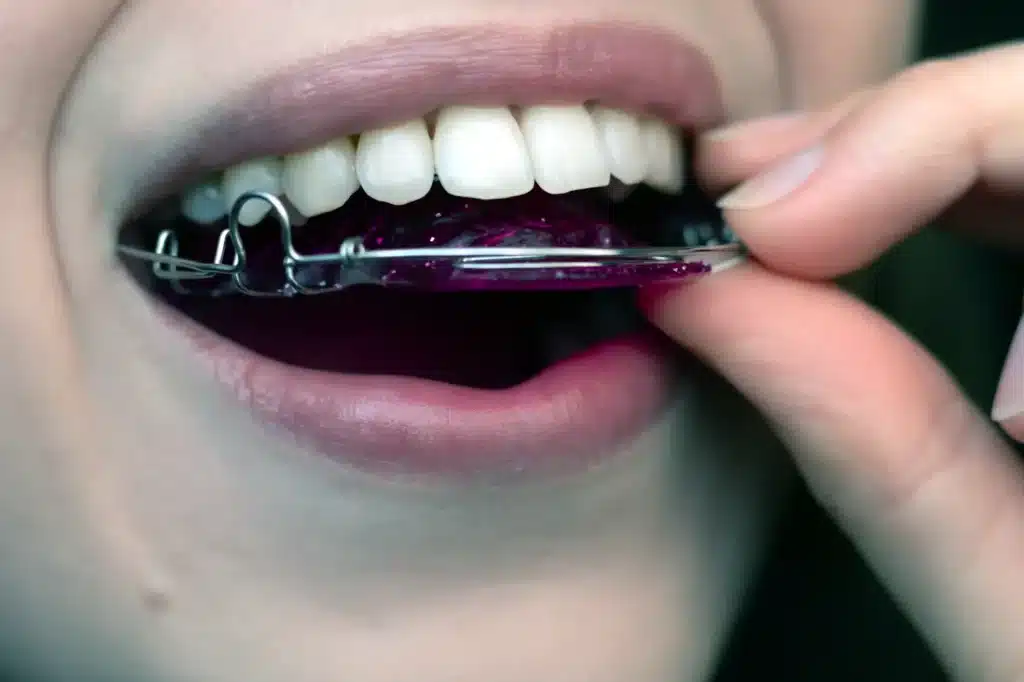
Hawley retainers have acrylic and wire parts, so they need careful handling. Brush the acrylic gently and clean around the wire without bending it. If the wire changes shape, the retainer may stop fitting correctly.
Always store a Hawley retainer in its case when you are not wearing it. Loose storage can bend the wire or crack the acrylic.
Permanent Retainers
Permanent retainers cannot be removed for soaking, so cleaning happens in the mouth. Brush carefully around the bonded wire and the backs of the teeth every day.
Floss threaders, interdental brushes, or dentist-recommended tools can help clean under and around the wire. Professional cleanings are also important because tartar can collect around fixed retainers.
How to Store Retainers So They Stay Clean
Clean storage is part of good retainer care. Let removable retainers air dry before placing them in a clean, ventilated case. A damp retainer in a closed case can develop odor quickly.
Wash the case regularly with mild soap and water, then let it dry completely. A dirty case can recontaminate a clean retainer, which defeats the point of cleaning.
Avoid wrapping retainers in napkins, placing them in pockets, leaving them loose in backpacks, or setting them near pets, heat, or direct sunlight. Many retainers are lost, thrown away, chewed, or warped this way.
When to Replace a Retainer or Ask a Dentist

Cleaning cannot fix every problem. Ask a dentist if your retainer is cracked, warped, rough, stained, loose, too tight, or still smells bad after proper cleaning. You should also get it checked if your teeth feel like they are shifting.
A poor-fitting retainer may not hold your teeth where they should be. It can also create pressure, discomfort, or uneven contact. If something feels different, do not force it.
At Olive Dental Solutions in Tijuana, patients from the U.S. and Canada can ask about retainers, bite concerns, orthodontic follow-up, and broader dental care through a Free Virtual Diagnostic. We have fully bilingual staff, clear communication, state-of-the-art equipment and materials, and support with shuttle, logistics, and accommodation planning.
For many dental travelers, the benefit is being able to compare options clearly while accessing significant savings compared with many U.S. prices without compromising quality.
The Takeaway: Clean Retainers Protect Your Smile Longer
The best way to clean retainers is simple: rinse after removal, brush gently, use mild or approved cleaners, let them dry, and store them in a clean case. Deep cleaning can help, but it should be safe for your retainer type.
Avoid hot water, abrasive toothpaste, bleach, alcohol-based mouthwash, and harsh scrubbing. If your retainer is damaged, smells bad after cleaning, or no longer fits well, it may be time for a replacement.
FAQ
Can I clean my retainer with toothpaste?
It is usually better to avoid abrasive toothpaste, especially on clear plastic retainers. Scratches can make the retainer look cloudy and hold odor.
How often should I clean my retainer?
Clean removable retainers after every use. Deep clean them as recommended by your dentist, often about once a week.
Why does my retainer smell bad?
Odor usually comes from saliva, bacteria, plaque, damp storage, or buildup trapped in scratches. Cleaning the retainer and the case can help.
Can hot water damage my retainer?
Yes. Hot water can warp plastic retainers and change the fit, so use cool or lukewarm water instead.
How do I clean a permanent retainer?
Brush carefully around the wire and use floss threaders, interdental brushes, or dentist-recommended tools. Regular professional cleanings help control tartar around the bonded wire.