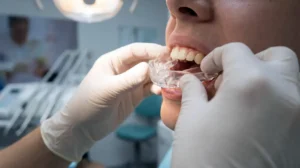

If you’re dealing with tooth loss, the first step to making an informed decision is to get familiar with your tooth replacement options. This guide covers the key differences between a temporary dental bridge vs permanent, including durable materials, cost, care, and what you can realistically expect.
What Is a Dental Bridge and Why Is It Used
A dental bridge “bridges” the gap left by missing teeth using crowns on the adjacent teeth or dental implants as the anchors. It’s made up of a few key components:
- Supporting teeth or implants: These hold the bridge in place on each side, helping maintain proper alignment.
- Pontics: These are the artificial teeth that fill the gap.
- Bridge materials: These can be porcelain, zirconia, porcelain-fused-to-metal, or metal alloys, colour-matched to your surrounding teeth.
A bridge replaces missing teeth, restores chewing function and speech, prevents your remaining teeth from drifting, and helps maintain facial structure and balanced bite forces.
Most bridges replace 1–3 consecutive teeth, although up to four may be possible if your supporting teeth, gums, and bone are healthy.
The main difference between a bridge vs implant is that a bridge relies on your neighbouring teeth, while an implant stands on its own and can help preserve bone. Implant-supported bridges can even replace several missing teeth.
Temporary Dental Bridge Vs Permanent: The Big Picture
So, we have established that a dental bridge is a fixed restoration that replaces missing teeth by anchoring artificial teeth to your healthy neighboring real teeth or dental implants. It can restore your front teeth, help you speak properly, and support your overall health. Now, let’s look at the main differences between a temporary and a permanent one.
Many patients get a temporary bridge first, followed by a permanent one once it’s been fabricated at the dental lab.
Temporary tooth bridges are usually made from acrylic or composite and are meant to last a few weeks to a couple of months.
Their main purpose is to protect prepared teeth and your smile while you wait for the permanent one.
They’re more affordable but aren’t designed for long-term use.
Permanent bridges, on the other hand, are custom-made from porcelain, ceramic, zirconia, or porcelain-fused-to-metal.
With good oral hygiene, they can last 10–15 years or more, hence why they are considered a permanent solution, restoring chewing, speech, and aesthetics while supporting your overall health.
Their higher cost reflects custom fabrication and long-term durability.
So, Are Dental Bridges a Lasting Solution?
At the end of the day, it all comes down to the purpose, whether high-quality materials are used, durability, comfort, and cost of the restoration. The state of your gums and bone, and how many teeth you’re missing, also play a big role in determining what solution will work best for you.
Don’t put off treatment any longer: speak to your dentist about your dental bridge vs implant options, as untreated gaps can cause teeth to shift and create further problems down the line.
What Is a Temporary Tooth Bridge
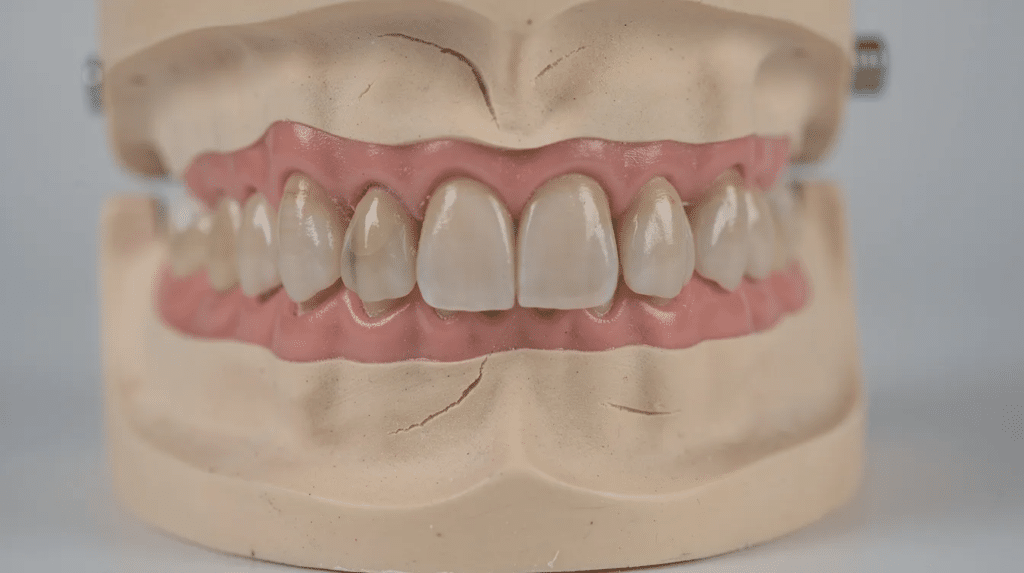
A temporary tooth bridge is a short-term solution made from acrylic or composite materials and held in place with temporary cement while the final bridge is being fabricated. At the first visit, your dentist will reshape the supporting teeth, take impressions or digital scans, match the shade, and place the temporary bridge.
Its main functions are to:
- Protect the exposed dentin and gum tissue from temperature and pressure changes.
- Stop your adjacent teeth from shifting into the gap.
- Restore immediate aesthetics and function.
- Allow gentle chewing and speech while the permanent bridge is made.
Temporary bridges usually last 2–4 weeks, although complex cases might require longer. Just be careful not to use them for heavy chewing and try to avoid sticky and hard foods since they can stain, wear, or loosen.
What Is a Permanent Tooth Bridge
A permanent tooth bridge is a custom-made restoration that’s designed for everyday use, with a precise fit for bite, comfort, and aesthetics.
At the second visit, the dentist removes the temporary, test-fits the permanent bridge, checks the bite and contacts, makes any final adjustments, and cements it with permanent dental cement. Final polishing removes any rough spots around the gum line.
Permanent bridges may use porcelain, zirconia, porcelain-fused-to-metal, or all-ceramic materials, depending on the strength and aesthetic needs of the tooth.
With proper care, permanent bridges can last many years, with studies showing survival rates around 89–91% at five years. Some can even last 20+ years with good oral hygiene and no grinding habits.
They restore natural-looking aesthetics, comfort, chewing, and speech. Most patients adjust within a few days to two weeks.
Temporary vs Permanent Tooth Bridge: The Bottom Line
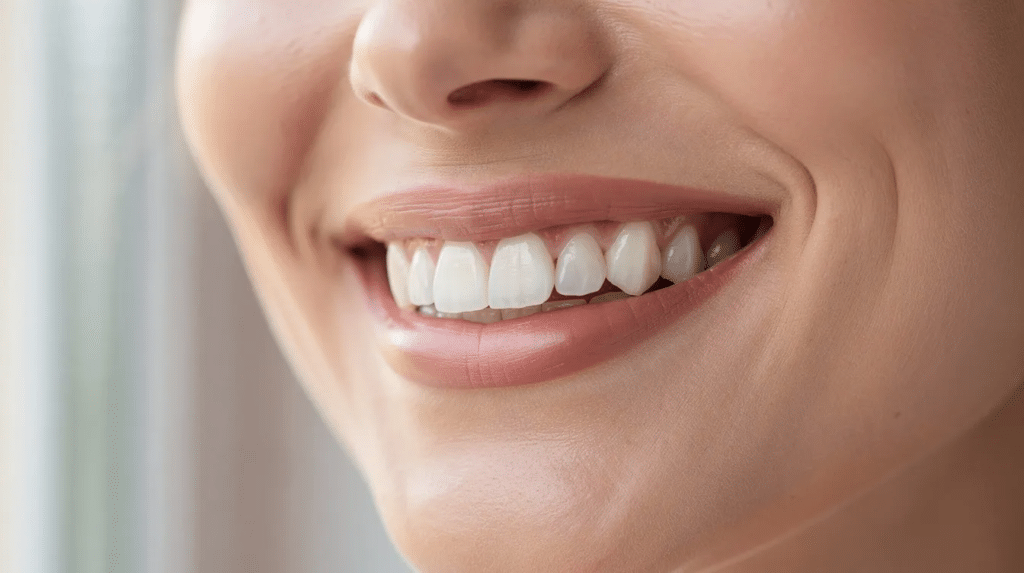
While both restorations may look similar, they differ in purpose, materials, durability, and fit:
- Purpose: Temporary bridges protect teeth during treatment; permanent bridges provide long-term tooth replacement.
- Materials: Temporaries use acrylic or composite; permanent bridges use porcelain, zirconia, or metal alloys.
- Cement: Temporary cement allows for dentist removal; permanent cement creates a lasting bond.
- Durability: Temporaries last weeks to months; permanent bridges are built for long-term chewing forces.
- Comfort and fit: Temporaries may feel bulkier or rougher, while permanent bridges offer a precise, polished fit.
- Aesthetics: Temporaries look acceptable, while permanent bridges are colour- and shape-matched to your natural teeth. Both can cover similar gaps, but gum disease, bone loss, or a chipped abutment tooth may determine if a permanent bridge is suitable. A permanent bridge accounts for the bulk of the overall treatment cost, though.
How the Dental Bridge Procedure Works (From Temporary to Permanent)
Treatment normally starts with an examination, some X-rays, and probably 3D imaging to check for decay, gum disease, and how much bone support is left in the area. Your dentist will then discuss a bridge, implant, or partial denture with you depending on your needs and budget.
At the preparation stage:
- A local anesthetic is given.
- The abutment teeth get shaped up.
- Any decay or old fillings are removed if needed.
- Impressions or digital scans are taken.
- The colour of the tooth is matched.
- A temporary bridge is then placed with temporary cement to protect the prepared teeth for a week or three while the dental laboratory makes the permanent bridge.
At the fitting appointment, the dentist will remove the temporary, check if the permanent bridge fits in the right place and bites properly, then cement it in and polish it up. A follow-up visit is needed to confirm that your gums are healthy and the bite feels comfy.

Living With a Temporary vs Permanent Bridge: The Care, Limitations, and Oral Health
Good everyday care is crucial for both types. Neglect can cause decay, gum disease, and early failure.
Taking care of a temporary bridge:
- You should brush gently around the bridge with a soft toothbrush.
- Slide the floss out rather than forcing it up through the gap.
- Try to avoid sticky foods, nuts, and hard crusts that can crack or dislodge the temporary.
- Chew on the opposite side of the mouth as much as you can.
For a permanent bridge, brush twice a day with fluoride toothpaste, and floss under the pontic using floss threaders or interdental brushes. A water flosser can be a big help too. You should stick to your regular dental appointments and six-month cleanings.
If you notice that your bridge is loose, sensitive, has cracked porcelain, swollen or bleeding gums, or you’re getting persistent trapped food or a bad taste, call your dentist. Plaque building up under a bridge can cause gum disease and bone loss around the supporting teeth, and that shortens the lifespan of the bridge.
FAQ
How long can a “temporary” dental bridge be safely left in place?
Most temporary bridges are designed to last a few weeks to a couple of months, but it can take up to six months in complicated cases. They are not meant for long-term use and will likely change colour, wear, stain, crack or loosen over time. Keep an eye on your teeth and contact your dentist if your temporary bridge starts to cause you discomfort or becomes loose.
Is getting a temporary or permanent dental bridge painful?
Most people find the procedure itself pretty comfy, thanks to local anesthetics used. You might experience some mild sensitivity or tenderness in your gums for a couple of days, which can be taken care of with some over-the-counter pain medication. If the pain is severe, persistent beyond a week, or keeps waking you up at night, it’s best to get in touch with your dentist.
Can a temporary or permanent bridge ever be removed and reused?
Temporary bridges are designed to come out easily and are hardly ever reused. Permanent bridges can sometimes be removed for maintenance or repair, but they can be damaged in the process. Never try to remove a bridge yourself or put it back in with some glue.
Do temporary and permanent dental bridges look any different?
Temporary bridges are usually reasonably natural-looking but might be a bit bulkier, less polished, or just not as pretty as a permanent one, which is carefully shaped and glazed to match the surrounding teeth and can look almost indistinguishable from your own, natural teeth.
What happens if my temporary bridge falls out before my permanent one is ready?
Keep hold of it, avoid eating on that side, and call your dentist straight away for re-cementation or replacement. Don’t even think about using household glue or trying a DIY repair kit; it can damage the teeth and gums, or mess up the final cementation.