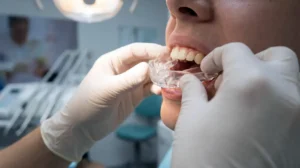

Looking to get a new, radiant smile? Well, you may have come across Invisalign on the web, and now you’re wondering, “Which one is better, traditional fixed braces vs Invisalign?” Well, this guide will now give you the answer you’re looking for.
When it comes to choosing between treatment options like traditional fixed braces and Invisalign, you’ve got a tough decision on your hands. Both will straighten those teeth of yours with ease, but they go about it in different ways and have different requirements for daily life.
- Invisalign aligners work by using a set of clear, removable aligners that are mainly ideal for people with relatively mild to moderate teeth issues, especially adult patients who want to get discreet results with fewer rules about what you can and can’t eat.
- Fixed braces use a bonded bracket and wire system that is often the better option for more complex orthodontic issues, or for people whose teeth are severely overcrowded, or for those who really need a serious bite correction.
- The best choice for you will depend on what you need, how much you’re willing to spend, your overall lifestyle, and whether you’re bothered about appearance. And, of course, how good you are at remembering to wear and care for those Invisalign clear aligners.
How Do Invisalign and Fixed Braces Actually Work?
Both Invisalign and conventional braces will straighten teeth by gently coaxing them into the desired positions through bone remodelling.
With the more traditional orthodontic treatment like fixed braces, a series of brackets and wires are stuck to your teeth and adjusted as and when needed. They just keep on working, so as long as nothing goes wrong, there’s no need to worry about compliance.
Invisalign, on the other hand, uses a series of clear, removable trays, each one designed to shift your teeth a little bit. You’ll probably change trays every 1 to 2 weeks and need to wear Invisalign for about 20-22 hours a day if you want the best results.
Before treatment even starts, both options use digital planning, based on scans, X-rays, and photos to map out where your teeth are going to end up.
Comfort, Food Restrictions, and Daily Life
The biggest difference between fixed braces and Invisalign isn’t just how they work, but how they fit into your daily routine.
Both can cause a bit of soreness when you’re first starting out; that’s just your teeth adjusting to their new positions, but with Invisalign that’s usually just pressure from the new tray. With fixed braces, you might also get some irritation from the brackets and wires rubbing against your cheeks and lips. Most people get used to it pretty quickly, though.
With fixed braces, you’ll need to steer clear of any hard or sticky food; that means no gum, no hard candy, no crusty bread, to stop the brackets getting damaged. Invisalign has fewer restrictions, but you’ll still need to take off the trays for every meal and only have plain water while you’re wearing them. You’ll also have to carry the tray case with you, put the trays in and out of storage whenever you eat, and give them a good clean before you put them back in your mouth.
That can get a bit of a hassle, especially if you’re out and about, on a long trip or doing something spontaneous and you can’t find somewhere to clean and store the trays. Invisalign gives you a bit more freedom to eat whatever you like, but it requires a bit more planning and lots of time.
Both treatments might make your teeth feel a bit funny for a week or two while your mouth gets used to the new shape; most people adapt pretty quickly.
How Do The Invisalign Treatment Compare to Metal Braces During the First Few Days?
Both can be a bit sore when you first start, especially when you’re putting in a new tray or adjusting your fixed braces, but the soreness usually fades away within a few days.
With inlays, you’re more likely to get a bit of tightness when you put in a new tray, but the smooth plastic is a lot less likely to irritate your cheeks than metal brackets and wires.
For most people, the discomfort is gone within a week or so.
What Is More Bothering: Constant Gentle Pressure or Regular Adjustments?
Neither is really more painful than the other; it’s just a matter of what kind of inconvenience you find more of a nuisance.
Fixed braces apply constant pressure to gradually shift your teeth, and need to be adjusted about every 4-6 weeks. You might get a bit sore afterwards, but at least you don’t have to remember to pop in a tray and take it out again.
Invisalign applies a bit of pressure when you put in a new tray, usually every 1-2 weeks, and you don’t need to go in for as many adjustment appointments, but you do need to wear them for most of the day and remember to put the new tray in.
In a nutshell: fixed braces need more professional input, while Invisalign needs more from you.
Physical Comfort vs Practicality: Which Matters More?
If you’re really bothered about how you look (and don’t mind wearing the trays for most of the day), Invisalign might be the better option. Plastic aligners are less irritating than metal brackets, and you can pop the aligners out when you want.
If you’re a practical sort of person who just wants the simplest option possible that works without too much fuss, fixed braces might be the way to go. Once they’re fitted, you can just forget about them; no need to remind yourself to put them in or take them out.
| Factor | Invisalign | Traditional Metal Braces |
| First few days | Pressure or Tightness | Pressure+ Possible Cheek Irritation |
| Ongoing discomfort | Mild Pressure with New Trays | Pressure + occasional wire/bracket irritation |
| Professional adjustments | Fewer appointments; new trays every 1–2 weeks | Usually every 4–6 weeks |
| Eating | Few restrictions; remove aligners | Avoid hard and sticky foods |
| Cleaning | Easier brushing and flossing | Extra cleaning around brackets |
| Daily responsibility | High: you manage wear time and trays | Lower: braces stay in place |
| Appearance | Virtually invisible | Clearly visible |
| Best For | Flexibility and Discretion | Continuous treatment with less daily management |
At the end of the day, the Invisalign treatment shifts the bulk of the responsibility into your daily routine while traditional braces shift it back to your orthodontist and scheduled appointments. Your best bet is the one whose responsibilities you’re most likely to keep up with consistently.
Appearance: How Much Will Treatment Stand Out?
Traditional metal braces are the most eye-catching, with brackets, wires, and elastics that show when you smile. Ceramic braces are a notch better; they’re less obvious, while lingual braces are basically hidden from view.
Invisalign aligners are almost invisible and easily removable, although you may notice small tooth-coloured attachments. For adults and people who are in front of the camera a lot, that discreet appearance is a real plus.
Talking, Smiling, and Socializing
For Invisalign patients wondering how it could affect the way they smile, talk, or interact with other people, there can be a short adjustment period. Some people notice a mild lisp during the first few days while their tongue gets used to the aligners, but speech usually settles quickly.
You may also feel more aware of your aligners when smiling, talking, or socializing, particularly at first. Although Invisalign is designed to be discreet, some people feel that the trays or attachments are more noticeable than expected, especially in close-up conversations or pictures and selfies.
For most people, this becomes less noticeable as they get used to wearing their aligners and stop thinking about them as much.
Mild vs Complex Cases, Which Option Do I Need?
Invisalign does a great job with lots of mild to moderate cases, like minor crowding, some gaps, or slight rotation issues. But for complex movements, severe rotations, lots of crowding, cases with extractions, or impacted teeth, fixed braces might be a safer bet.
And while you don’t have to worry about remembering to wear removable aligners with braces, that can be a real advantage for kids, teens, or people who struggle with keeping up with their treatment plan.
Your orthodontist will take a good hard look at your teeth with scans, photos, and X-rays to figure out which option is best for you.
Treatment Time: How Long Does It Take?
The amount of time you’ll need to treat depends on how complicated your case is and how well you stick to the plan.
Invisalign:
- For minor corrections: around 6 months to be done
- For mild to moderate cases: usually 12–18 months
- For complex cases: up to around 24 months
- You’ll change your aligners every 1–2 weeks
Fixed Braces:
- Typically 12–36 months
- Most full cases take around 18–24 months
- You’ll be back in to get them adjusted every 4–6 weeks
Invisalign needs you to commit to wearing them every day, while fixed braces provide continuous treatment without relying on you to keep up with it. Your orthodontist can adjust the expected time frame as your teeth start to move.
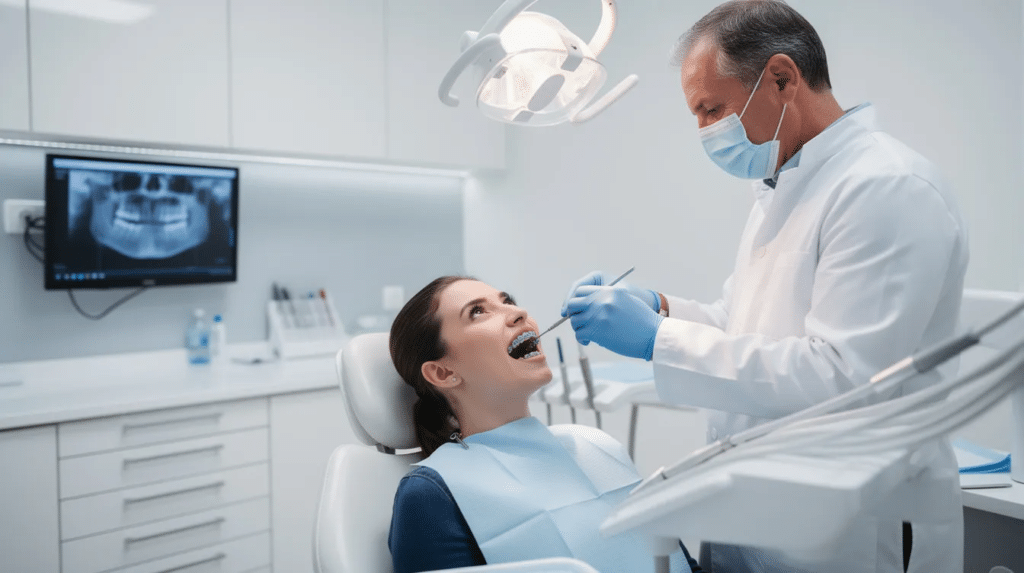
Keeping Your Teeth Clean: Brushing, Flossing and Long-Term Health
Taking care of your teeth during orthodontic treatment is super important to avoid cavities, white spots, and gum problems.
With Invisalign, you just take out your trays and brush and floss as you normally would. When you clean your aligners, make sure to use lukewarm water, a soft brush, and a clear soap; no abrasive toothpaste and never hot water.
Fixed braces are a bit trickier because food can get stuck around the brackets, rubber bands, and metal wires. So you’ll need to brush carefully after every meal and use a water flosser or interdental brushes to get to all areas. And both treatments will need professional cleanings every now and then.
Cost, Aftercare & Choosing Between Invisalign & Fixed Braces
Invisalign and fixed braces are pretty much the same price, but the price will vary depending on how complicated your case is, the length of treatment, how many visits you need, and a few other factors.
Traditional braces can run you around $3,000–$7,500 while Invisalign can cost between $3,000–$8,000. Insurance and payment plans can help make it more manageable.
Both treatments require retainers to prevent your teeth from shifting after treatment is over. These can be removable trays, bonds in your teeth, or a combination of both, and you’ll need to wear them consistently.
Go with Invisalign if you’re really looking for a super discreet option that’s easy to live with, especially if you have a mild to moderate case.
Go with fixed braces if you have more complicated orthodontic issues or you’re not too fussed about remembering to wear removable aligners.
A consultation with an orthodontist who offers both options can help you compare them based on your teeth, your lifestyle and what you’re trying to achieve.
FAQ
Can I switch from Invisalign to fixed braces (or vice versa) if I change my mind?
Sometimes, but it’s not always the easiest thing to do because you may need a new treatment plan and some new appliances. It’s worth having a chat with your orthodontist upfront so you can choose the option that best fits your goals.
Are Invisalign aligners or fixed braces better for athletes and musicians?
Invisalign is often the better choice for contact sports and for musicians who play wind or brass instruments because the smooth plastic is gentle on your lips. Braces can still work, especially with a custom mouthguard for sports, but they can take a bit of getting used to.
Do I need to change my normal oral hygiene routine during treatment?
It is extremely important to maintain good oral hygiene with any of the treatment options previously mentioned. With Invisalight, you can usually keep using your regular fluoride toothpaste. With braces, a soft-bristled brush and a water flosser can make cleaning easier. Just remember to be gentle with your aligners and follow your dentist’s advice on oral care.
Do either Invisalign or fixed braces hurt or damage your teeth?
Both are generally safe when they’re done right, assuming you’ve planned things out and are keeping a close eye on things. Risks such as root shortening, enamel wear and gum problems are way-from-the-norm these days and can be minimised with regular check-ups, getting a good handle on moving your teeth and taking care of your teeth and gums yourself.
How soon do people start to see real results after they start treatment?
Many patients start to notice the beginnings of change within 8-12 weeks or so. Your front teeth usually start moving first, and it’s not until later on, when all the bite correction and final fine-tuning has been done, that you really start to see some tangible improvements.