
Dental implants have earned their reputation as one of the most reliable solutions for missing teeth, but it’s no secret that long-term success all comes down to proper dental implant maintenance. Implant patients doing their part with consistent home care, regular professional dental cleanings, and making some smart lifestyle choices means your implants can stay functional and pain-free for decades to come.
- Modern dental implants can easily last 20+ years, with a whopping 95% of them still good to go after 10 years if they get the TLC they need.
- Caring for your prosthetic teeth is pretty much just like caring for your own teeth: brush twice a day, floss between your teeth every day, and keep up those routine dental visits.
- Making lifestyle changes to steer clear of smoking, keeping diabetes in check, and being gentle with your implants can help reduce the risk of peri-implantitis and implant failure.
- Professional cleanings are usually recommended every 3-6 months, depending on your individual risks.
- Any time you notice bleeding, swelling, a bad taste, persistent pain, or your implant starts to feel loose, be sure to get in for a check-up ASAP.
How Dental Implants Work and Why Proper Maintenance Matters
A dental implant is made up of three main bits & pieces: a titanium or zirconia implant post that gets screwed into the jawbone, an abutment that connects the implant to the restoration, and a custom crown, bridge, or full-arch prosthesis to finish it all off.
The first 3-6 months are all about letting the bone surrounding the implant grow and create a solid foundation. So while dental implants are basically cavity-proof, the gums and bone around them can still get inflamed or infected if they don’t get the right care.
Build-up of plaque and poor oral hygiene can set off a chain of events: gum inflammation, bone loss, peri-implantitis, and eventually, dental implant failure. To get the best results, you need to put as much effort into daily implant care as you do into getting an implant in the first place.
The Healing Process: From Surgery to Implant Stability
The healing period is when you really need to take care of that implant to make sure it sets up well.
The first 24-48 hours: Just take it easy, apply some ice for swelling, stick to soft foods, and avoid any smoking; that can really slow down the healing process.
Week one: Your gum tissue is going to start closing over the surgical site. Your dentist might give you an anti-bacterial mouth rinse to use instead of brushing directly over the area, but not always.
Weeks 2-6: You’ll start to feel a bit more comfortable, but it’s still not time to go back to your old eating habits just yet; no heavy chewing, sticky candies, or anything else that could put a strain on the implant site.
Months 3-6: That’s when you’ll know whether or not you’ve got healthy bone levels, a great sign that things are going well before you get your final restoration placed.
Signs you need to get back to the dentist pronto:
- Persistent or increasing pain after day three
- Bleeding that won’t stop
- Fever, pus or a bad odor
- Visible loosening of the healing cap or implant components
Early treatment can often nip problems in the bud and save you from needing further work.
Daily Home Care: Brushing, Dental Floss, and Beyond
Your daily routine for keeping your implants healthy is pretty simple: it’s all about consistent dental implant hygiene.
Brushing: Brush twice a day for at least two minutes with a soft-bristle manual or electric toothbrush. Try to angle those bristles towards the gumline, taking care of both your implants and your natural teeth.
Toothpaste: Pick a non-abrasive toothpaste that’s not going to scratch your implant restorations and encourage bacteria to grow.
Interdental cleaning: Clean around your implants every day using traditional floss, or an implant-specific floss if you’ve got those. Floss threaders or super floss can come in handy for getting to the tricky areas around fixed bridges and such.
Interdental brushes and water flossers: If you’re using an All-on-4 or have a full-arch dental implant, then these tools can be especially useful for plaque removal and food particles that just brushing can’t get.
Mouth rinse: An alcohol-free anti-microbial mouth rinse can be a useful addition to your daily oral hygiene routine. Prescription rinses like chlorhexidine are usually only used for a short while after surgery.
Under bridges and full-arch prostheses: You’re going to need to use some specialized floss or interdental brushes to get under the restoration.
The truth is that it’s more about consistency than it is about one particular product.
Professional Implant Maintenance: What Happens at Your Routine Dental Visits
Most people with healthy gums should probably be getting dental implant maintenance checks every six months. But if you’ve got gum disease, diabetes, or have had problems in the past, then you may need to check in with your dentist a bit more frequently, every 3-4 months depending on your individual risks.
During these maintenance checks, the dental team will check out your gum health based on colour and contour, look for signs of swelling and plaque buildup, and make sure that your implant is nice and stable.
Professional cleanings remove plaque and calculus using specialized tools, implant-safe instruments, and cleaning systems that are designed to avoid scratching implant surfaces. Periodic X-rays can help keep an eye on bone levels around the implants, while bite evaluations help spot grinding, high spots, worn restorations, or loose screws that could put too much pressure on an implant.
These routine professional care visits are essential for dental implant maintenance and allow your doctor to refine your at-home care routine.
Lifestyle Habits That Support Long-Term Implant Success
How you live your daily life really can have a big impact on how long your implants will last.
Cut out smoking and vaping; tobacco use increases the risk of all sorts of implant problems, including peri-implantitis and implant failure. Nicotine also slows down healing, reduces blood flow, and contributes to bone loss.
Take care of your overall health. Well-controlled diabetes can be just fine with dental implants, but poorly controlled diabetes makes it more likely that you’ll end up with infections and bone loss. A balanced diet with calcium, vitamin D, and protein will also do your bone health no harm.
Do something about bruxism. Grinding your teeth and clenching your jaw can loosen screws, damage restorations, and put too much pressure on your implants. A custom night guard can help protect your implants and natural teeth from all the extra forces.
Don’t be too hard on your implants. Don’t use your teeth as tools or try to bite down on ice, pens, hard candies, or other hard objects that could do some real damage. Steer clear of habits that put unnecessary stress on your implants.
Making just a few small changes and sticking to them, along with regular implant care, will give your implants the best chance of lasting for decades.
Recognizing and Preventing Implant Complications
Most dental implants go on to work perfectly well, but being able to spot the early warning signs can stop minor problems turning into major complications.
Peri-implant mucositis is inflammation of the gum tissue around an implant, and it’s usually reversible. Common symptoms include redness, swelling and bleeding when you brush your teeth, without any significant bone loss.
Peri-implantitis is a deeper infection involving the gums and supporting bone. It can cause bone loss, deeper pockets, pus, implant mobility and eventually, if left untreated, implant failure.
Some of the common risk factors include:
- Previous severe periodontal disease
- Smoking or tobacco use
- Uncontrolled diabetes
- Not cleaning your teeth properly or regularly enough
- Grinding your teeth or using too much force when biting
- Not going to the dentist regularly enough
And if you have open contacts between your teeth, that can also increase the amount of plaque and inflammation in one place. If you notice any of the following symptoms, you should get in touch with your dentist: persistent bleeding, bad breath, gum recession, swelling, pain or discomfort when biting, or your implant feeling loose.
Early treatment may involve a deep clean, adjusting the way your teeth fit together, better home care, or medication if needed.
Caring for Different Types of Dental Implants
The basic principles of implant oral hygiene are the same, but the way you clean them varies depending on the type of restoration.
Single-tooth implants: Proper cleaning is just like with your natural teeth. Use a soft-bristled brush along the gumline and clean both sides with some floss or interdental brushes that are designed for implants.
Implant-supported bridges: You need to clean under the pontic areas too. Floss threaders, super floss, interdental brushes, and water flossers can all help get into the areas that a normal toothbrush can’t.
All-on-X and full-arch prostheses: You need to clean the entire gumline where the prosthesis meets the surrounding tissue. Use a soft toothbrush along with a water flosser and interdental brushes, and floss specifically designed for implants.
Overdentures on implants: Remove the denture and clean the underside and the implant attachments. Keep the gums and tongue clean as part of your excellent oral hygiene routine.
Your dentist can show you exactly how to do it based on the position, the design, and if you’re getting multiple implants.
How to Make Implant Maintenance a Lifelong Habit
Consistency is key, not perfection. Try to connect brushing and interdental cleaning with things you already do regularly, like after breakfast and before bed, so implant maintenance becomes second nature.
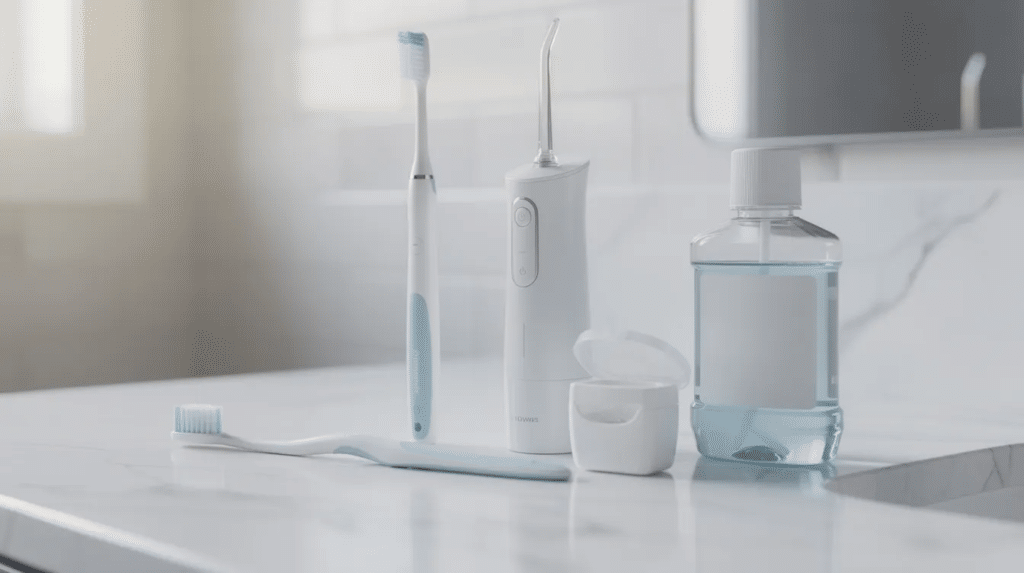
Keep all the essential tools handy, including a soft toothbrush, implant-safe interdental brushes, floss or floss threaders, water flosser tips, toothpaste and mouthwash. And if you need a reminder, you can always set your phone to remind you to do your nighttime routine and book your next dentist visit.
It’s okay to slip up from time to time; the important thing is to get back on track as soon as you can.
Regular dental implant maintenance, combined with proper care and a healthy lifestyle, will help keep your implants in great shape, preserve your overall oral health, and give you a confident smile for years to come.